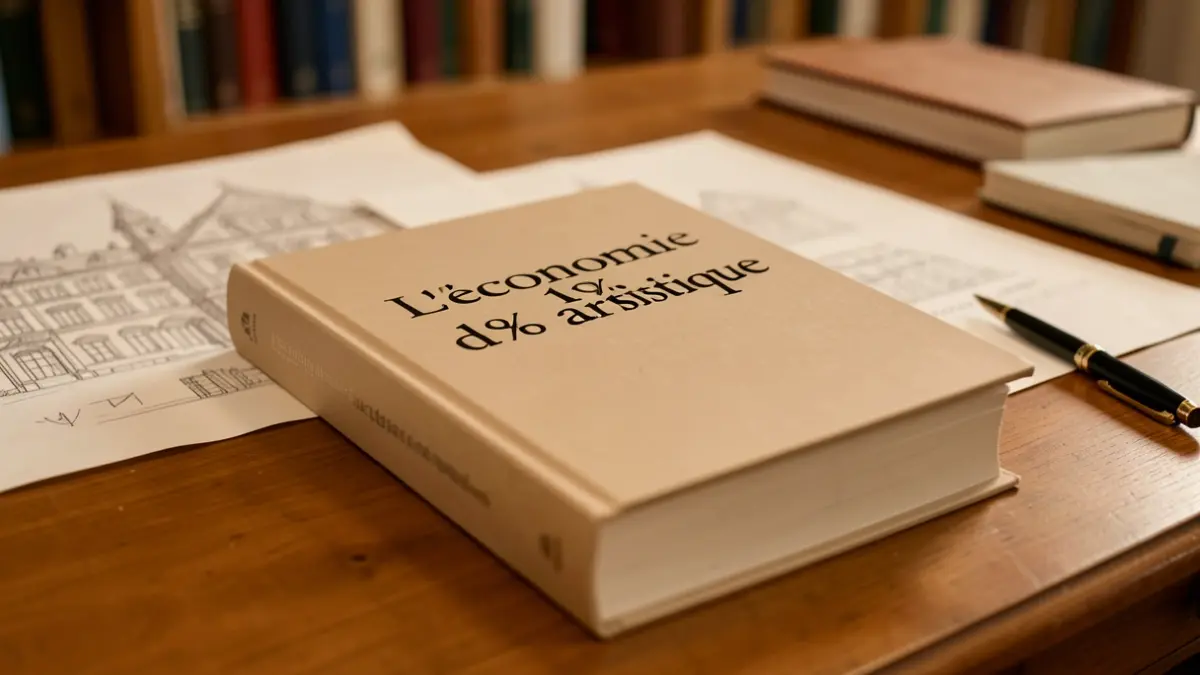
The book The Economics of the 1% Artistic. Creation, Value, Heritage, published by Classiques Garnier, offers an interdisciplinary approach to the transformation of public art commissions. This scheme, established in the 1950s, requires 1% of the construction budget for public buildings to be allocated to a decorative artwork. Although little studied as a whole, this mechanism has undergone significant changes, particularly with its extension in the 1980s.
Christian Bessy highlights the criticisms that have affected the 1%, first from the artistic community, then by some sociologists who denounced a 'bureaucratic art' benefiting a small number of artists close to power. The author also analyses inequalities of access to these commissions and shows how conventions of artistic quality have mutated, moving from 'academic' sculptors to the most recognised plastic artists.
The book underscores the role of Regional Funds for Contemporary Art (FRAC) and the emergence of new intermediaries who contribute to the professionalisation of the artist's status and the heritage status of artworks. However, the 1% economy remains fragile in the face of rising conservation and promotion costs. Christian Bessy proposes a mutualisation of costs between public and private actors to preserve this cultural heritage.