The ceremony took place on November 20 and honored the work of third-year engineering students, first-year MSc&T program students, and Master 1 students at the Institut Polytechnique de Paris, of which the school is the pedagogical reference. Clémence Reynaud was recognized for her research project conducted at the Weiss Lab at the University of Montreal.
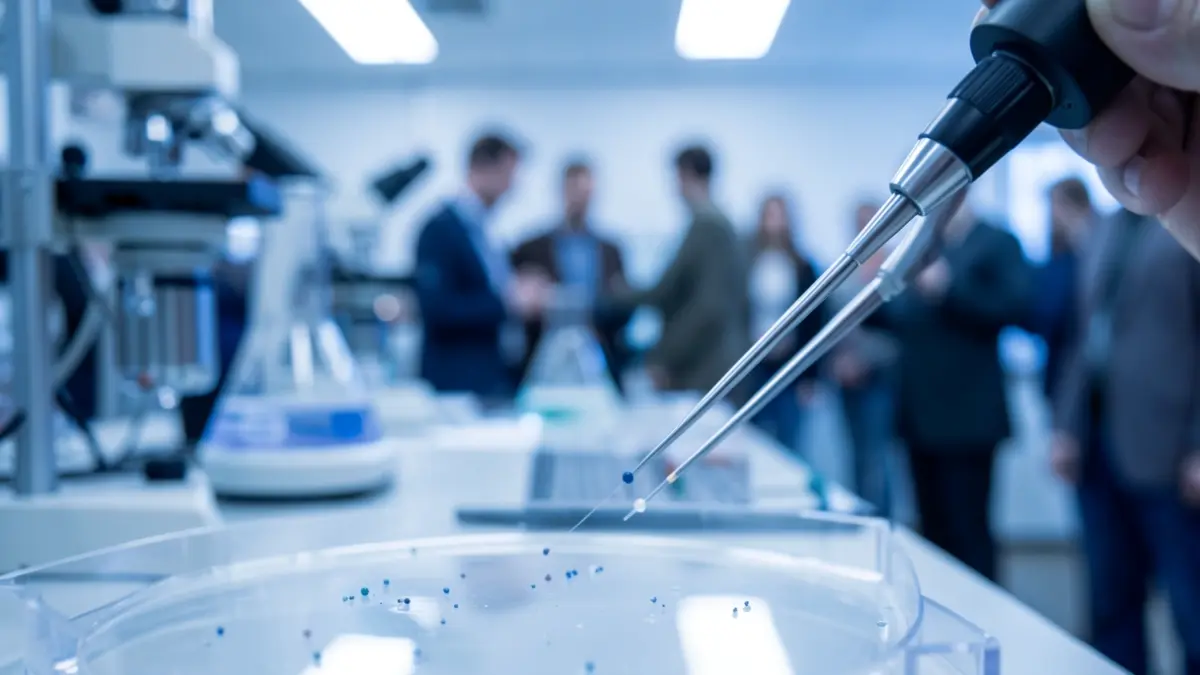
Her project involved studying the adhesion of bacteria from the order Caulobacterales at the unicellular level, using a tool called optical tweezers. She compared different environmental strains to a laboratory strain to better understand their adhesion mechanisms. The study also examined their ability to attach to various antifouling surfaces, designed to limit bacterial adhesion.
“"In the short term, this project shows that optical tweezers can be used as a tool to evaluate the effectiveness of different antifouling coatings. They allow measuring bacterial adhesion at the individual level and comparing their behavior on different surfaces."
In the long term, this approach could contribute to the development of more effective coatings, particularly to limit biofilm formation on ship hulls or industrial equipment. The holdfast, a biological glue produced by Caulobacterales, is also of great interest: its adhesion strength is often described as approximately 30 times greater than that of superglue. Better understanding its composition could open the way to new applications, particularly in the development of high-performance biological glues that are potentially more environmentally friendly.