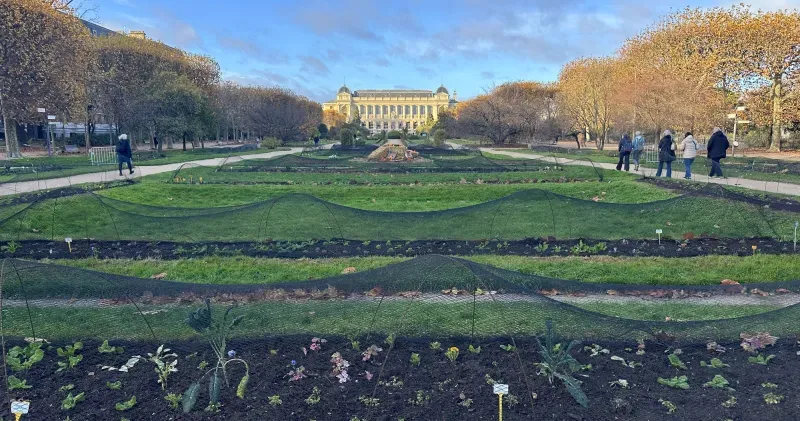
Autumn is a crucial period for the Jardin des Plantes, marking the start of preparations for spectacular spring blooms. Gardeners remove summer rhizomes to plant spring bulbs such as tulips, fritillaries, and hyacinths. They also install perennial and biennial plants, protected by nets against crows to limit chemical use.
Some species like primroses and garden pansies are already flowering, while others, such as wood forget-me-nots, artichokes, bergenias, and poppies, will bloom in spring. Meanwhile, seeds for summer flowering are being prepared in the greenhouses of the Arboretum de Versailles-Chèvreloup, requiring cool temperatures for germination.
A gardener's tip for winter sowing: it's advisable to research the natural habitat of the plant you wish to germinate. Seeds from cold regions or those that ripen in autumn can be planted in pots in a bright, unheated room after cold storage, remembering to label and date the sowings.
As part of the European URBLOOM project, the Jardin des Plantes is experimenting with more sustainable and climate-resilient flowerbeds. These beds combine ornamental, wild, and horticultural plants to promote biodiversity and attract a richer pollinator fauna.
The Alpine Garden has closed to the public from November 1st until March 1st, 2027, allowing fragile mountain plants to rest. Gardeners are working to recreate favorable environmental conditions, including winter protection.
The School of Botany has renovated its signage with new panels for a smoother visitor experience and quotes on benches. Gardeners are planting biennials and perennials and carrying out autumn sowing, while also mulching the soil to nourish and protect future plantings.
A practical guide, "Quatre saisons au Jardin" (Four Seasons in the Garden), co-published by Marabout and MNHN, offers monthly tips for garden maintenance, covering tree pruning, composting, soil work, and fruit tree grafting.