The PARSEC project aims to improve our understanding of the brain and vision mechanisms by combining optics and neuroscience. Supported by Émergence funding, this exploratory project has achieved a key technological milestone through the development of novel optical approaches.
Led by Dimitrii Tanese, a CNRS researcher in physics at the Institut de la vision, the project seeks to observe and manipulate the activity of a larger number of neurons simultaneously, while minimizing effects on living tissues. Vision, for instance, relies on complex neural networks processing visual information from the retina to the brain.
The technique combines multiphoton microscopy, which targets cells deep within tissues using infrared light, with optogenetic tools. These tools make neurons fluorescent and light-sensitive, allowing for the detection of their activity or controlled activation. The goal is to study larger neuronal populations and extensive brain regions.
“"This funding was crucial because it allowed us to pursue a very exploratory research avenue."
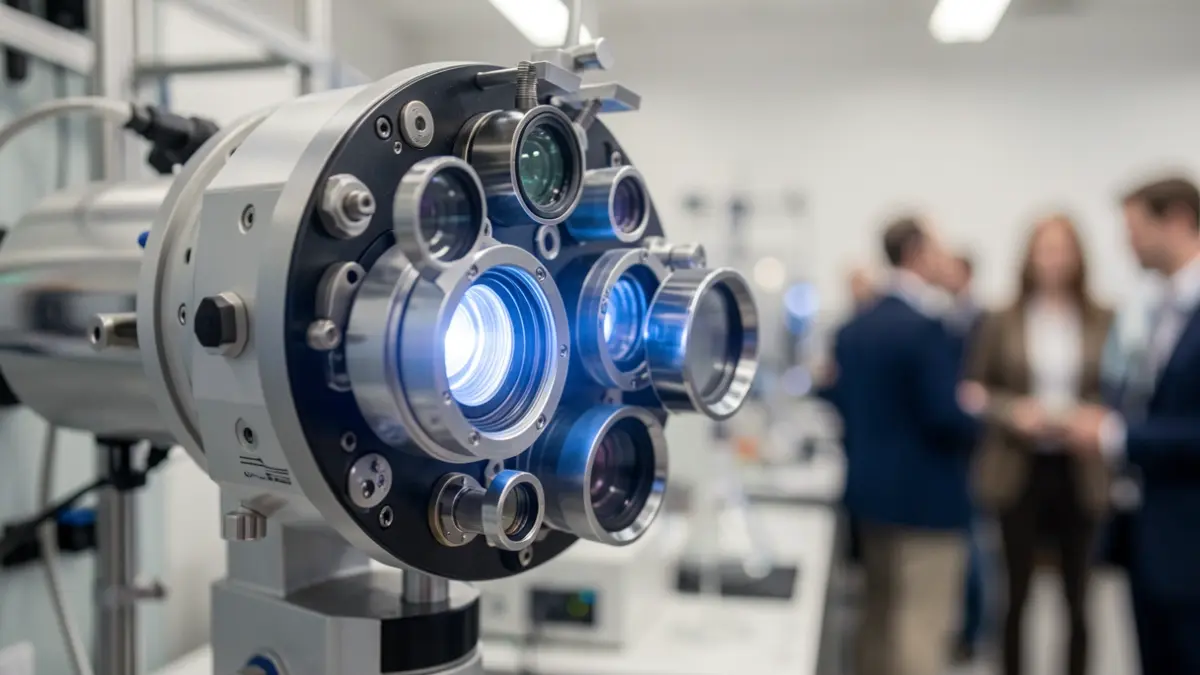
The Émergence funding helped overcome obstacles, notably by financing a new laser source capable of emitting ultra-fast light flashes and a dedicated optical device. These advancements have yielded encouraging results in optical neuron stimulation, significantly reducing the required laser power.
Future research plans include simultaneously activating a large number of cells in the mouse visual cortex and testing new voltage indicators for rapid detection of neuronal electrical activity. In the longer term, this work could contribute to a better understanding of vision disorders and guide the development of implants for visual restoration.