Uterine muscle contractions, or the myometrium, play a central role in childbirth and the menstrual cycle. However, in pathologies such as endometriosis and adenomyosis, these movements can become abnormal, painful, and contribute to infertility. Until now, scientists used a transducer to measure these contractions, a mechanical method limiting the study to one to four tissue fragments simultaneously.
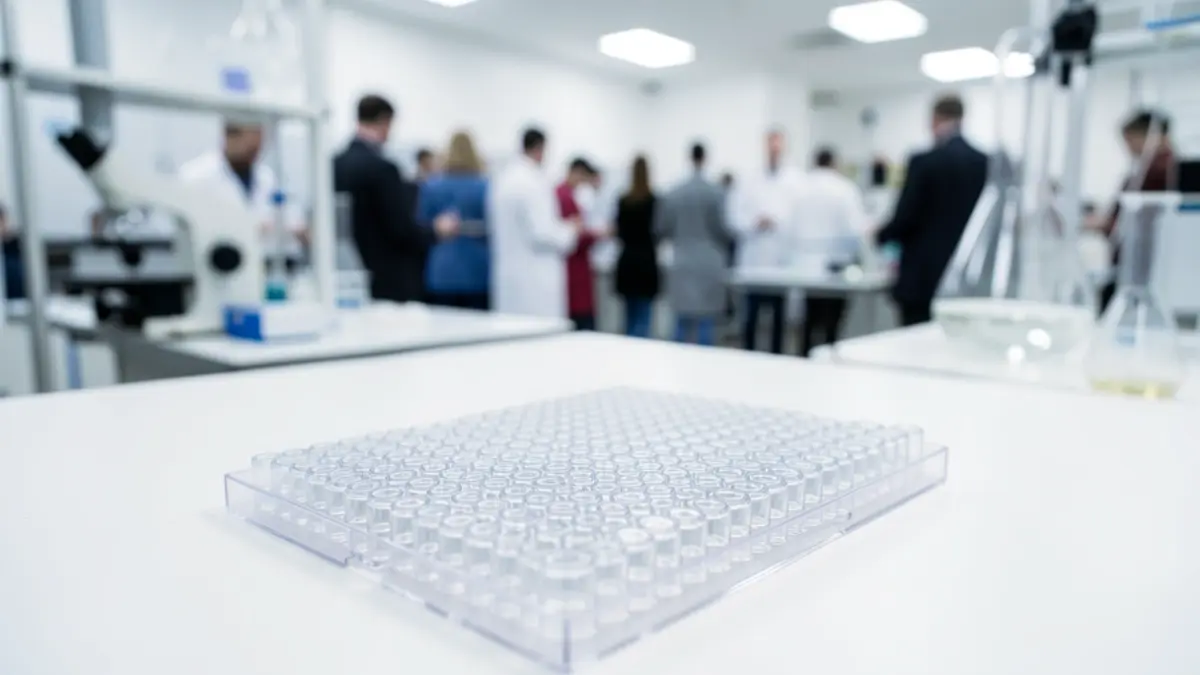
To overcome this limit, the team from the Matter and Complex Systems Laboratory (Université Paris Cité/CNRS) developed an approach based on the optical observation of movements. From a biopsy, the tissue is cut into millimetre fragments and placed in the 96 wells of a laboratory plate. A very high-resolution camera films each fragment, and image processing measures contractions over time.
This method allowed the simultaneous testing of different pharmacological conditions. Scientists thus identified several compounds capable of reducing contractions, including benzbromarone, a drug usually used to treat hyperuricaemia. The results, published in Frontiers in Pharmacology, open new perspectives for studying contraction mechanisms and identifying molecules capable of regulating them.
This work is part of the HYPERU project, supported since 2023 by the Endometriosis Research Foundation. This new approach should facilitate the identification of treatments for severe menstrual pain, endometriosis, adenomyosis, as well as premature contractions during pregnancy, which affect 10% of births.