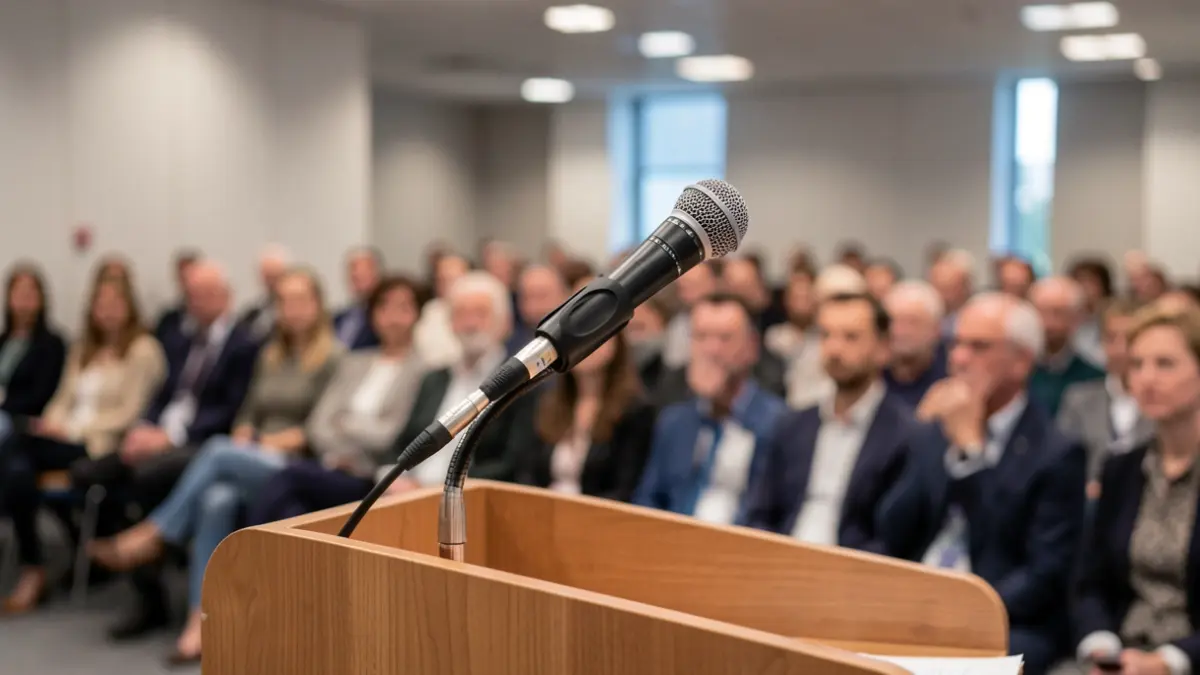
Pressure, impostor syndrome, weight management and lack of psychological support: these were the themes discussed during this meeting. Fatia Benmessahel, a former French national boxing team member and European junior champion, shared her experience. She described a rapid progression accompanied by a strong sense of imposture, pushing her to give her all without real support, either psychological or nutritional. 'To compensate for my lack of technique, I went all out. I wanted to do everything perfectly, but without real support,' she explained, adding that injury was often ignored for fear of being replaced.
The end of competition was also experienced as a shock. 'I found myself alone, working at home in front of my screen,' the former athlete confessed. She nevertheless highlighted the support received from the Department through the Génération Jeux scheme, which allowed her to fund her engineering studies. Gevrise Emane, a triple world judo champion, also took the floor to call for high-level female athletes to be considered as whole persons, not just medal winners. After a failure at the Beijing Olympics, she was able to overcome her breakdown thanks to the support of psychologist Meriem Salmi.
Meriem Salmi, a psychologist at the INSEP, clarified the specific pressures faced by female athletes, including attacks on their bodies and the lack of consideration for menstrual cycles. 'You have to learn to manage the excess! To do this, you have to dare to say: 'I'm not okay',' she stressed. Sports psychologist Emilie Thienot recalled that sport should remain a resource for managing stress, rather than an injunction or a risk factor.
Finally, the issue of parity was addressed. Sébastien Guittard, general secretary of Noisy-le-Grand handball 93, presented his club's initiatives to reach 49% female players in 2026, up from 25% in 2015. The session concluded with remarks from Dolorès Ortega-Tejero, the departmental councillor in charge of sport, who stated that women's mental health in sport is a societal and equality issue, requiring solutions implemented together by women and men.