As part of the International Fortnight against violence towards women and girls, echoing November 25th, the town of Stains is hosting several events this month. The association Pucif (united women citizens of the territory) has held awareness workshops at the Maison des associations, with the last one scheduled for Saturday, November 21st. Municipal staff have also received training over two mornings, led by the Nef network, to better identify and support women victims of violence.
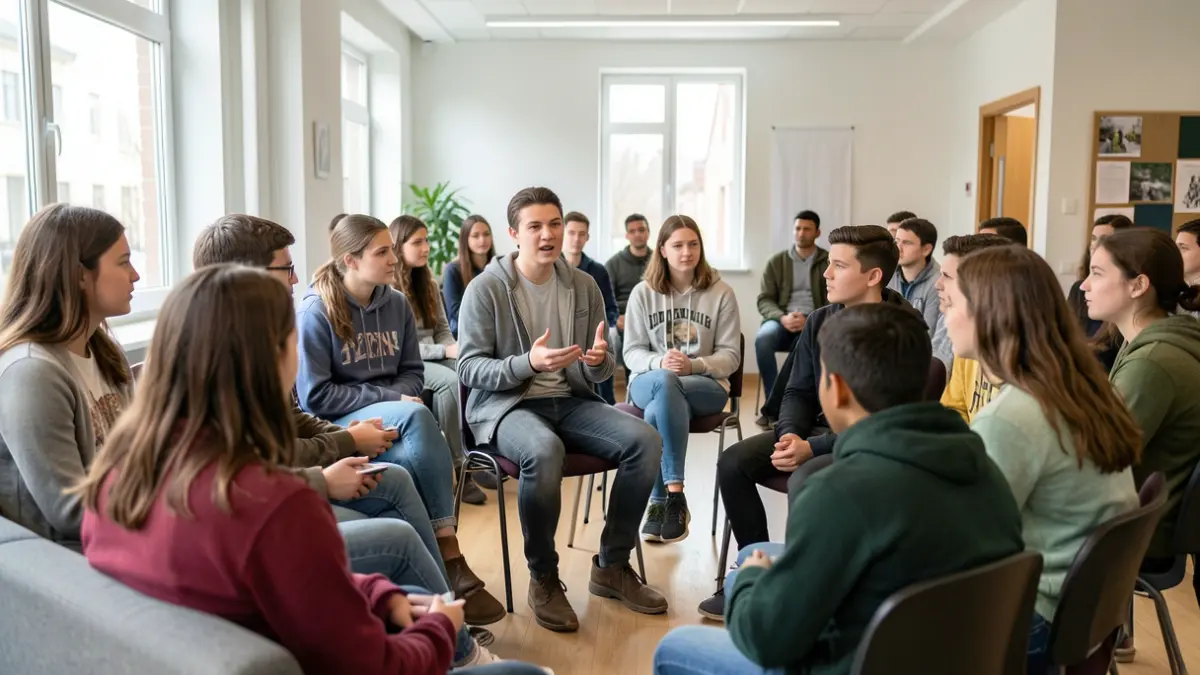
To raise awareness across all age groups, 4th and 3rd-grade students from Sainte-Marie and Neruda middle schools participated in a debate screening on November 17th at the Espace Paul-Éluard. The short film 'Paname,' made by high school students, was shown. It depicts a group of friends facing a man who gives them gifts in exchange for sexual favors, leading one of them to become a victim of blackmail. This screening facilitated a discussion between the adolescents and speakers: a psychologist from the Centre municipal de santé, a risk prevention manager for the Département, and the film's team.
“"'Nadia, she gets influenced by her friends,' 'I don't understand where the parents are,' 'this is 'michetonnage'.' The young viewers, especially the girls, shared their analyses and questions."
Adolescents shared their insights, with one student noting the victim 'fell into the trap' because 'boys weren't interested in her.' Emmanuel Meunier, a prevention specialist, corrected this, stating, 'It's more of an easy profile. She is the most fragile in the group of friends, needing to boost her self-esteem.' The psychologist added, 'This is how situations of mistreatment arise. Someone saw the victim's vulnerability and exploited it.'
The discussion also covered consent, particularly in a scene where the victim has a sexual encounter after drinking. 'We see she's been drinking, she wasn't in her normal state, so she wasn't 100% consenting,' a young girl estimated. Walid Lamadri confirmed that 'a person with altered consciousness is not capable of fully consenting,' and reminded the audience that victims of rape and violence do not always react the same way, with the brain responding differently to danger, making it difficult for some to verbalize their assault.
Talking is the first step to ending violence. 'Even if we are sometimes scared or ashamed, when you are a victim, you must speak to a responsible adult,' recalled one of the teachers. He also urged students to help a classmate who witnesses such a situation and to report it. Professionals from the Centre municipal de santé, including a nurse and a marital counselor, along with a prevention educator, introduced themselves to the young people, conveying the message: 'We are here to listen.' Finally, the students received a gift and a booklet with information and prevention content created by the municipality.