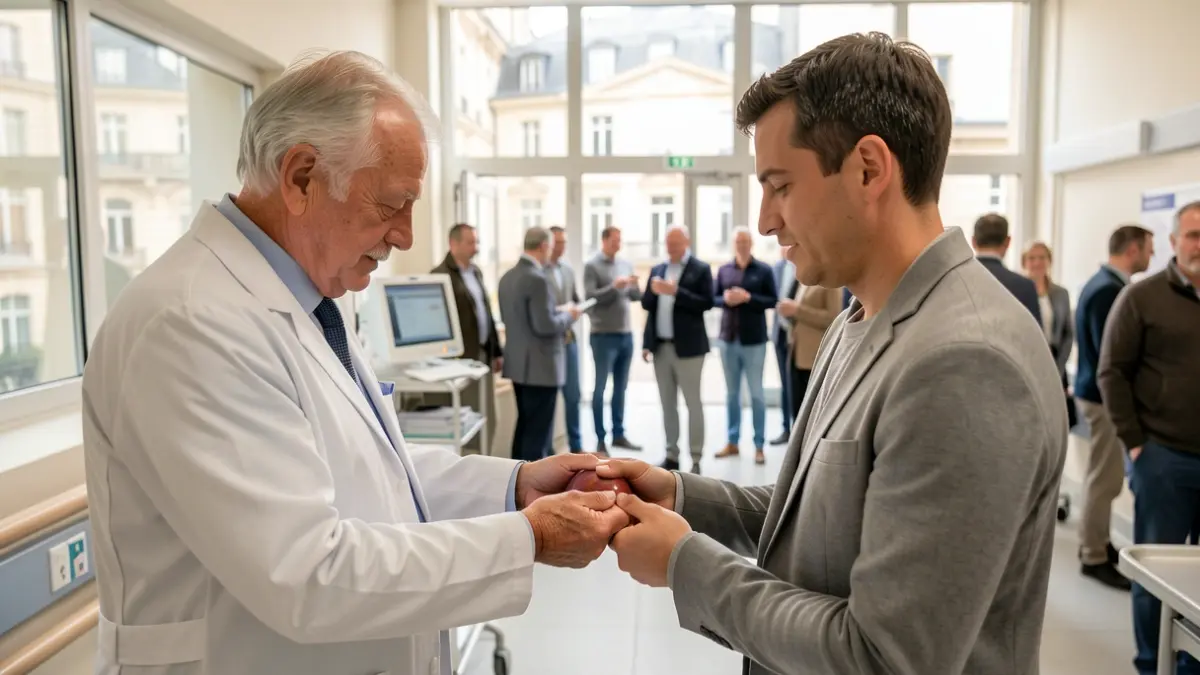
With World Organ Donation Day nearing, the joint testimony of Patricio, 46, a kidney donor, and his father-in-law Augusto, 67, highlights the importance of this act of solidarity. They recount their experience, from the decision to recovery, emphasizing the medical, psychological, and human aspects of this process.
Patricio's decision to donate a kidney to Augusto, whom he considers a father figure, was driven by a strong family bond and the desire for him to remain a grandfather to his grandchildren. Following the incompatibility of the recipient's daughter and wife, Patricio volunteered after conclusive compatibility tests. Despite initial concerns from his loved ones, he researched the subject and approached the commitment without fear, aware of the necessity to avoid or delay dialysis for Augusto, who suffers from Fabry disease.
The medical process for the donor was comprehensive, spanning over six months with in-depth examinations, medical and psychological consultations, as well as legal and social support to cover potential administrative and financial consequences. For Augusto, suffering from end-stage renal failure due to Fabry disease, the transplant offered an alternative to dialysis, a prospect he dreaded.
The waiting and preparation periods were marked by moments of hope and disappointment, particularly after his wife's incompatibility. As the waitlist for deceased donors yielded no results, Patricio's donation became a crucial solution. Medical teams provided rigorous follow-up, explaining the benefits of the transplant, potential risks like rejection, and offering psychological support.
The hospitalization, despite a chaotic start due to a communication issue upon admission, proceeded with attentive care from the medical staff. The first 48 hours were critical to confirm the transplant's success. Patricio, though slightly stressed by his first hospitalization, was reassured by family support and confidence in a positive outcome. Augusto, more accustomed to procedures, handled waking up calmly, despite initial disorientation.
Post-operative recovery required a convalescence period. Patricio experienced fatigue and mild pain but resumed his daily life and work within a few weeks. Augusto, after temporary fatigue and scar pain, regained new energy, while adapting to strict medical monitoring, dietary restrictions, and an anti-rejection treatment. Concerns about rejection risk and managing other pre-existing conditions remain.
Today, Patricio feels in excellent health and proud of his act, which he sees as giving Augusto and his family a second chance at life. Augusto, still recovering, expresses deep gratitude and looks forward to a more serene future, hoping to travel again. Their already strong relationship has become even closer.
The pair emphasizes the importance of medical support and family backing to navigate this experience. They hope their testimony will encourage others to consider organ donation, a life-saving gesture that minimally impacts the donor's life. The full financial coverage by the hospital for all related expenses is a crucial point to remember.