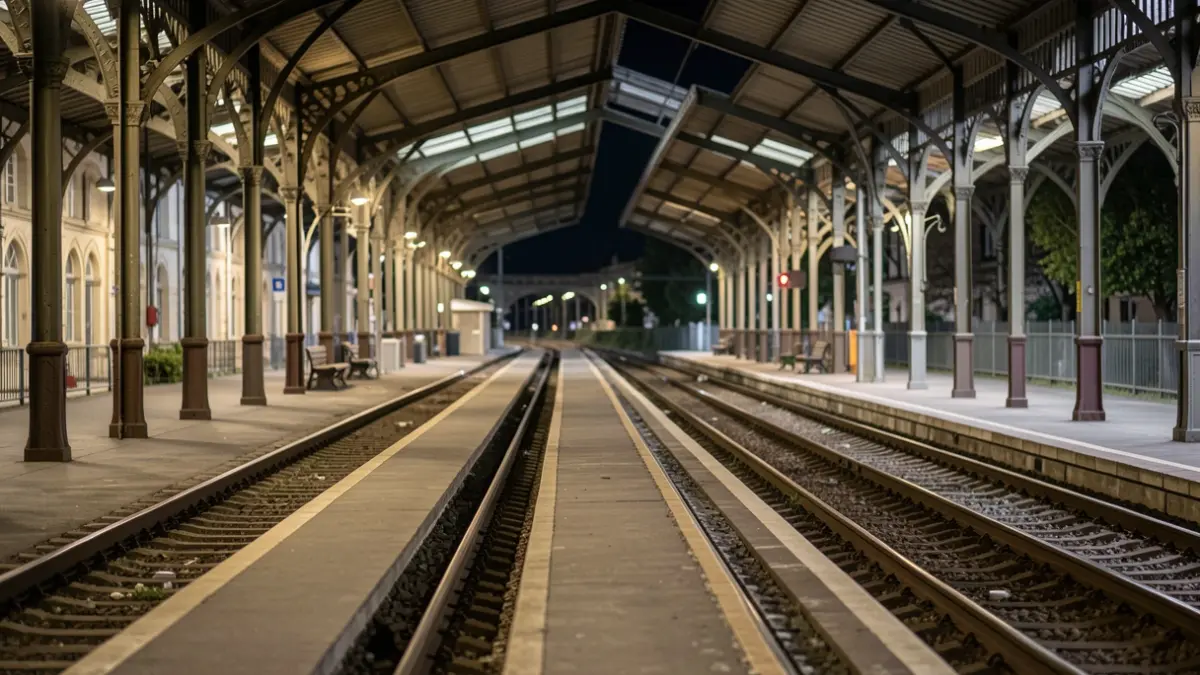
The project, described as a 'long night', took place between La Varenne-Chennevières and Boissy-Saint-Léger stations. The goal was the complete renewal of the tracks and ballast, including platform cleaning over 36 linear metres for this specific section. Train traffic was suspended from 9:45 PM, with passengers transferred to shuttle buses running every 8 minutes.
The process began with the arrival of a work train nearly 450 metres long from the Sucy Technical Services Park. Once the power cut was confirmed by the Unified Command Centre, teams cut the rails and removed old track panels. Rail-road excavators then removed the ballast and extracted the underlying soil up to 80 cm deep.
Platform cleaning required the installation of an insulating layer to prevent moisture rise, followed by the deposition of compacted sand. The new track was laid starting at 12:30 AM, with ballast added to secure the assembly. A specific machine, the tamping machine, then stabilised the foundation and corrected the horizontal and vertical alignment of the rails.
These 'long nights' are essential as RER A tracks are now reaching 50 years of age. Unlike short nights (2:00 AM-4:00 AM) reserved for routine maintenance, this early closure allows for large-scale work. Over the 14 evenings of this programme, teams renewed 309 metres of track, installed 515 sleepers and 825 metres of rail, and moved approximately 1,600 tons of ballast and gravel.