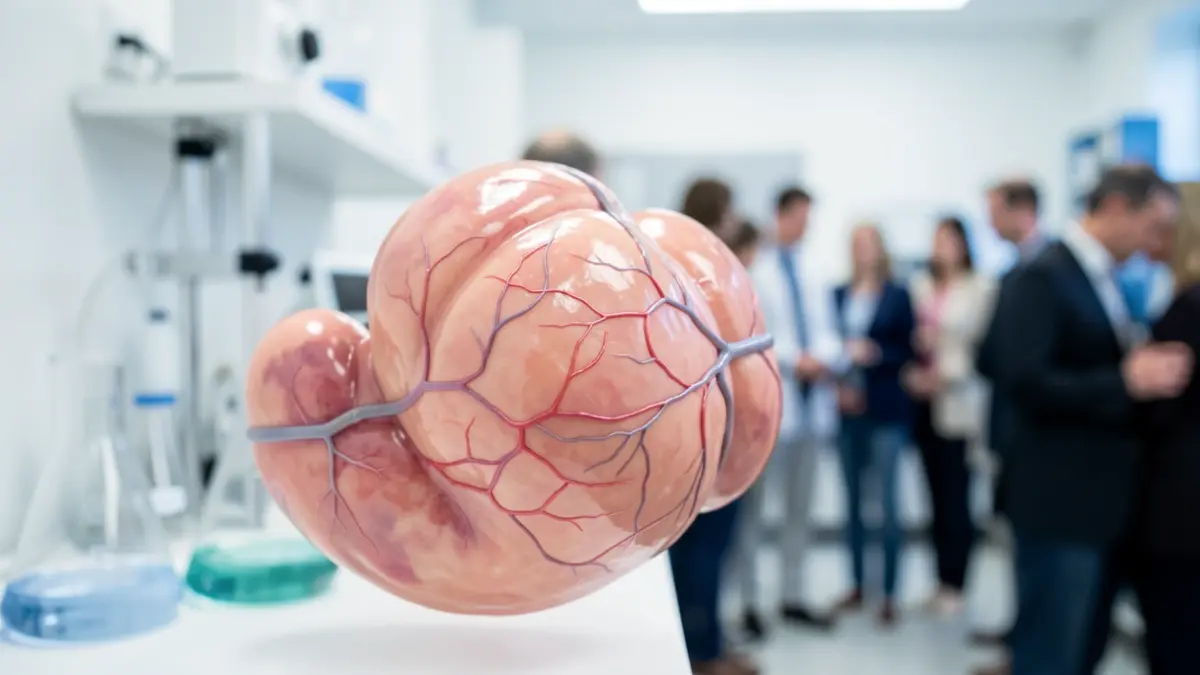
Facing the rise in cancers diagnosed in younger women and increasingly later pregnancies, treating cancer during pregnancy has become a major concern. The CARGO project, supported by the University of Versailles Saint-Quentin (UVSQ), addresses this issue.
This project is advancing through a collaboration with the maternity ward of the Hôpital de Poissy Saint-Germain-en-Laye. Human placentas, collected after C-sections, serve as the basis for experiments. The objective is twofold: to assess a drug's ability to cross the placental barrier and potentially reach the fetus, and to test the toxicity of drugs on placental cells themselves.
These studies will help measure the potential impacts on the baby's development and the course of the pregnancy. Hadia Moindjie, a research professor at the IMPROVE laboratory at the UFR Simone Veil-Santé, is leading this project.