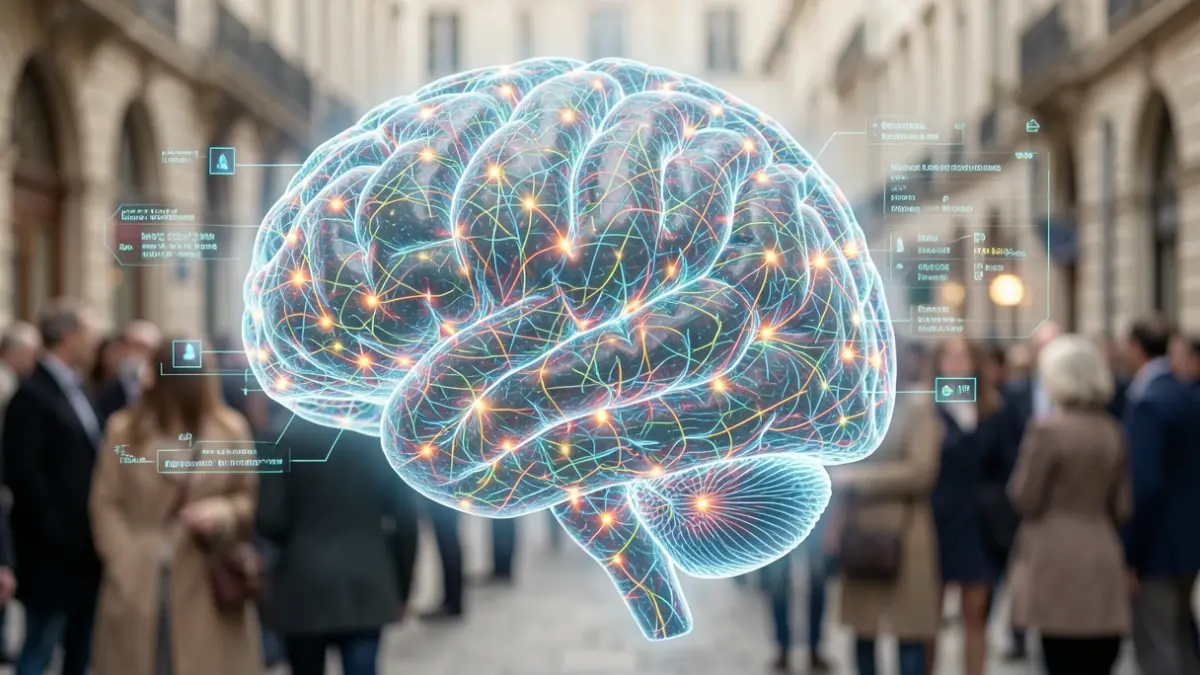
On the occasion of World Mental Health Day, researchers from the CEA and their partners are presenting significant advances in understanding and treating psychiatric disorders. This work aims to better diagnose these conditions and improve their management.
To accelerate the diagnosis of bipolar disorder, a new method combining electroencephalography (EEG), functional near-infrared spectroscopy (fNIRS), and artificial intelligence is being developed. This portable and non-invasive approach analyzes brain activity in response to emotional stimuli to identify the disorder with high accuracy, including its subtypes.
Regarding depression, researchers are using PET imaging to understand how ketamine rapidly relieves symptoms. By observing mouse models, they found that ketamine increases synaptic density, improving depression-associated behaviors. This method paves the way for a better understanding of antidepressant treatment response.
The role of a gene coding for the DCLK3 protein in stress adaptation and memory has been revealed. Studies on mouse models show its involvement in psychiatric conditions such as depression, anxiety disorders, and schizophrenia, shedding new light on these diseases.
Finally, artificial intelligence is being used to analyze the unique folds of the brain, which are an individual's signature. This fine analysis could help predict psychiatric disorders like schizophrenia, bipolar disorder, and autism spectrum disorders, resulting from complex interactions between early brain development and later environmental influences.