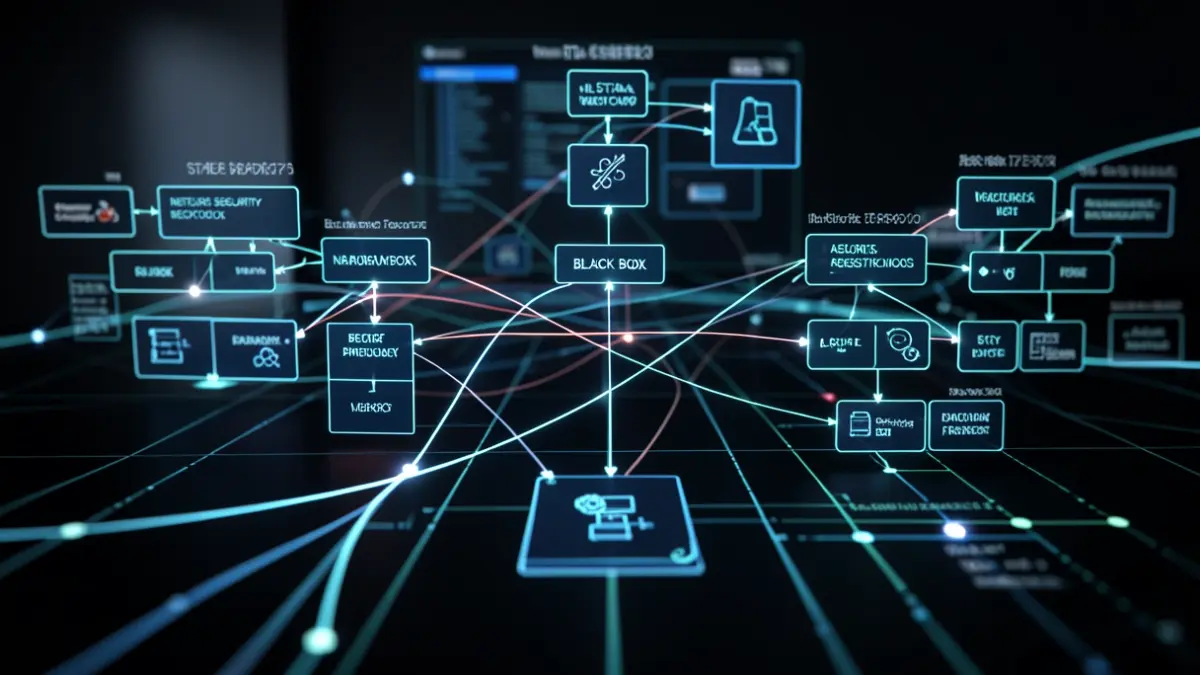
The vulnerability, rated 9.4/10 on the CVSS scale, allows for an authentication bypass in wolfSSH versions prior to 1.4.22. It was discovered by Olivier Levillain, a researcher at Télécom SudParis, and Aina Rasoamanana from Valeo. This flaw demonstrates the limitations of traditional code audits and emphasizes the Active Automata Learning methodology, developed by the engineering school to secure critical systems in a 'black box' manner.
The SSH protocol, essential for remote administration, relies on three layers: Transport, User Authentication, and Connection. Unlike the TLS protocol, SSH has remained more confidential despite its crucial importance. The study on wolfSSH, a lightweight implementation favored in the automotive, aeronautics, and IoT sectors, revealed a major structural deviation: the software's state machine accepted authentication messages before the server had proven its identity.
For an attacker positioned as a network interceptor (Man-in-the-Middle), this breach opens the door to critical scenarios such as credential leakage or session hijacking. Active Automata Learning, developed within the Digital Security and Trust (SCN) team at the SAMOVAR laboratory at Télécom SudParis, interacts directly with the software without consulting its source code. Using the L algorithm, it reconstructs the application's internal state machine by analyzing responses to message sequences.
Olivier Levillain explains that the technical challenge lies in translating algorithmic abstractions into real network messages, allowing for the exploration of unexpected sequences and the uncovering of hidden flaws. This approach surpasses traditional audits by offering a visual and verifiable model of actual behaviors, even with thousands of lines of code.
Following a Responsible Disclosure procedure, the editor wolfSSL collaborated with researchers to release the secure version wolfSSH v1.4.22 in January 2026. This episode underscores the importance of simplifying protocol specifications, formalizing state logic, and automating negative testing.
This research, stemming from Aina Rasoamanana's doctoral thesis at the Institut Polytechnique de Paris, exemplifies Télécom SudParis's model of partnership and applied research. The school is now extending this inference method to other critical industry protocols such as QUIC, RDP, and OPC UA.