Certain everyday products such as paints, solvents, DIY products, gardening products, or aerosols can pose risks to health and the environment if disposed of improperly. They should therefore not be thrown away with household waste, down drains, or in recycling bins.
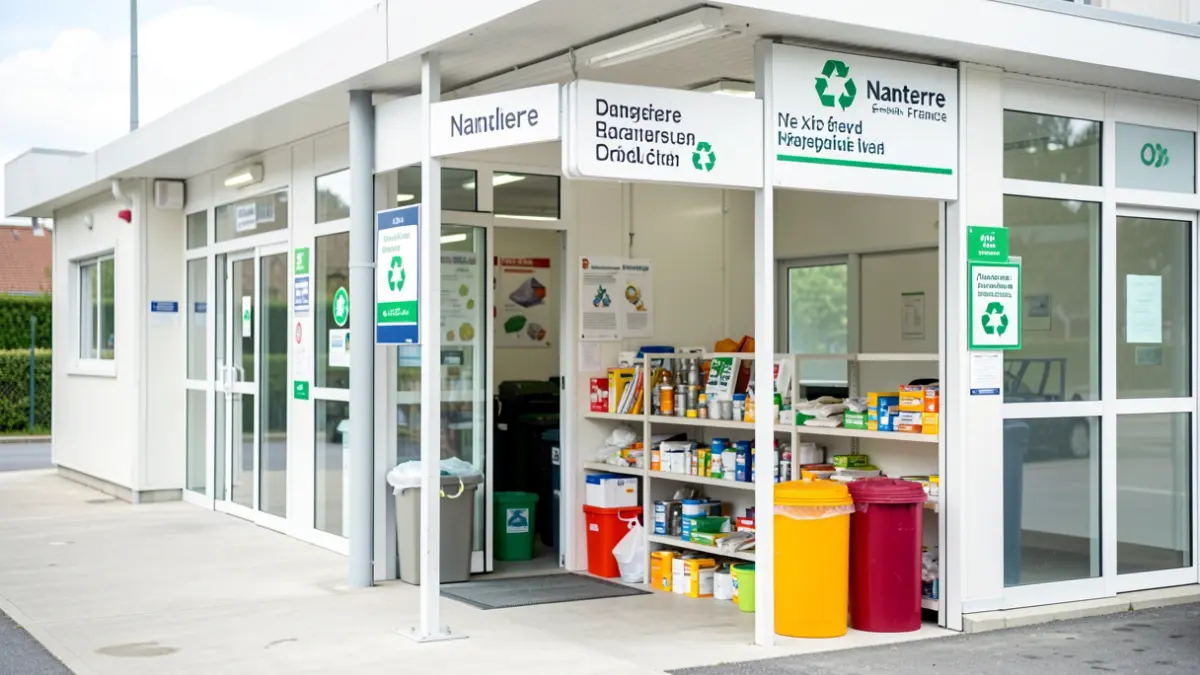
To facilitate their drop-off and improve user reception, the fixed recycling center in Nanterre has been redesigned. Signage has been improved, floor markings reinforced, traffic flow better identified, and the dedicated zone for toxic and dangerous products optimized. These changes make the user journey clearer and more practical.
The new signage aims to simplify the user's journey and make sorting instructions more visible, guiding everyone to the appropriate containers while improving safety on site.
Among the developments, the area dedicated to toxic and dangerous waste has been optimized. These wastes, resulting from renovation, DIY, or home and garden maintenance, require special handling. Improper disposal can pose risks to collection and treatment agents, as well as to the environment.
By depositing them in the dedicated area, these products can be managed by EcoDDS, the accredited eco-organization for the management of household chemical waste. It is advisable to group these dangerous products separately and keep them in their original packaging when possible.
A chemical product does not become harmless once it becomes waste. Thrown in a regular bin or poured down drains, it can disrupt water treatment facilities. The correct action is to never dispose of a hazardous product with household waste or down drains.
If in doubt, sorting instructions are available on-site, and agents are available to advise users. Properly directed hazardous waste represents one less risk for people and the environment.
This initiative is part of the national waste reduction effort, supported by the development of the PLPDMA by Paris Ouest La Défense.