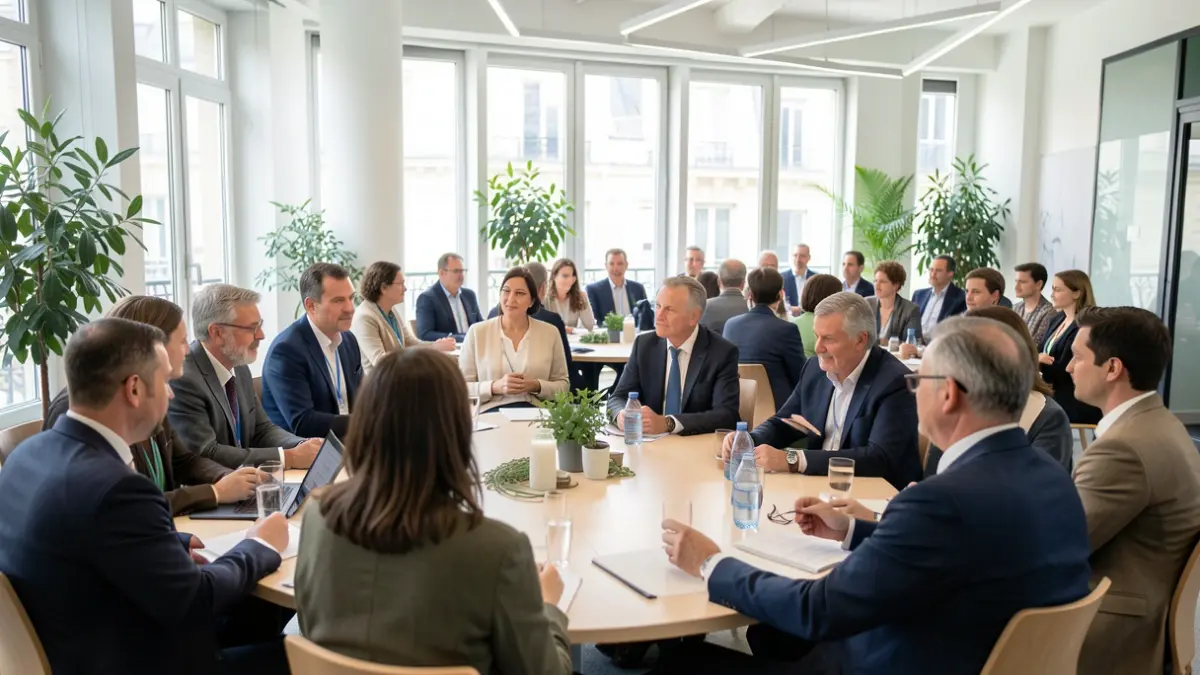
The event, titled 'Connecting Humans to the Living World,' convened elected officials, local authorities, researchers, associations, and environmental professionals. The aim was to review five decades of commitment to the natural spaces of the Île-de-France region and discuss upcoming challenges.
The day, opened by Sophie Deschiens, president of Île-de-France Nature, and moderated by journalist Denis Cheissoux, traced the evolution of regional policies for preserving natural, agricultural, and forest areas. Discussions also explored nature's place in daily life, how to facilitate access to natural spaces, reconcile different uses, and enable everyone to connect with them while preserving biodiversity.
Faced with climate change and evolving public expectations, speakers emphasized the need to continue and adapt ongoing actions. Preserving natural and agricultural spaces, restoring ecological continuities, re-greening cities, and developing cool islands are key levers for strengthening the resilience of Île-de-France territories. Concrete examples such as the re-naturalization of the Saint-Eutrope regional forest parking lot, actions around the Bondy regional forest, and the development of La Végétale, a 20-kilometer green corridor, illustrated these transformations.
A shared conviction emerged: nature preservation relies as much on protecting environments as on making them accessible and involving local stakeholders in projects. Closing the event, Valérie Pécresse, president of the Île-de-France Region, reiterated the region's commitment to natural spaces, while François Léger, president of the scientific council of the Conservatoire du littoral, shared insights on the challenges of sharing nature.
After 50 years of action, Île-de-France Nature reaffirms its ambition: to preserve, reconquer, and share the natural spaces of the Île-de-France region so that nature is present everywhere and for everyone.