The PLANETES project, led by the IPGP and the deeptech start-up MAÅGM, has been selected and funded by the National Research Agency as part of the LabCom 2026 program. This joint laboratory aims to establish a sustainable research and development capability dedicated to a new generation of very high-precision mechano-optical instruments, usable both in space and for terrestrial applications.
Directly aligned with the instrumental strategy of the IPGP, which has already contributed to Martian and lunar missions, PLANETES aims to maintain global leadership in planetary seismology. The project will prepare instruments for future missions, paving the way for new measurements such as rotation, deformation, or gradiometry, and for instruments adapted to the exploration of the Moon, Mars, lunar gravitational wave detectors, and icy moons of the Solar System.
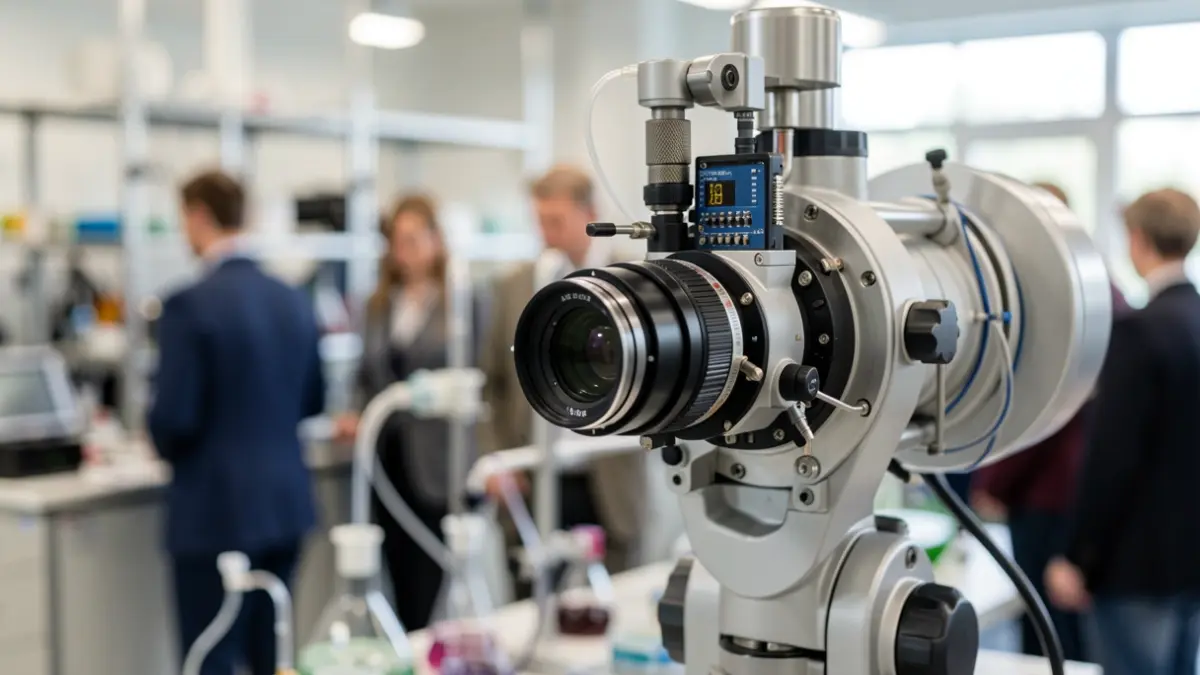
The LabCom will not be limited to a specific space application. It will form a common technological base, founded on ultra-high-resolution interferometry, very low-noise mechanical oscillators, and stable, space-deployable electronics. The methods, characterization benches, and prototypes developed can thus be mobilized by other components of the IPGP.
“"MAAGM has incredible expertise in optics that we need. And by building with MAAGM outlets beyond planetology, we consolidate the ecosystem around our high-performance lunar seismometer and thus secure our strategic objectives."
“"I am very proud to associate MAAGM with a team that has designed and operated a seismometer on the surface of Mars to be able to offer innovative terrestrial geophysical sensors for natural risk prevention."
The seismology and marine geosciences teams, along with the seismological and volcanological observatories, will be involved in defining needs and qualifying terrestrial instruments. Envisioned applications include ground rotation measurement, improved underwater seismic observations through tilt correction, fault and volcano monitoring, and the deployment of sensors in extreme environments. The partnership also contributes to sustaining technologies already used in IPGP observatories, such as the LOKI optical interrogator, developed by ESEO.
By combining the IPGP's experience across the entire development cycle of space instruments with MAÅGM's expertise in photonics, mechatronics, and industrialization, PLANETES will enable the transformation of one-off projects into a genuine French geophysical instrumentation sector.