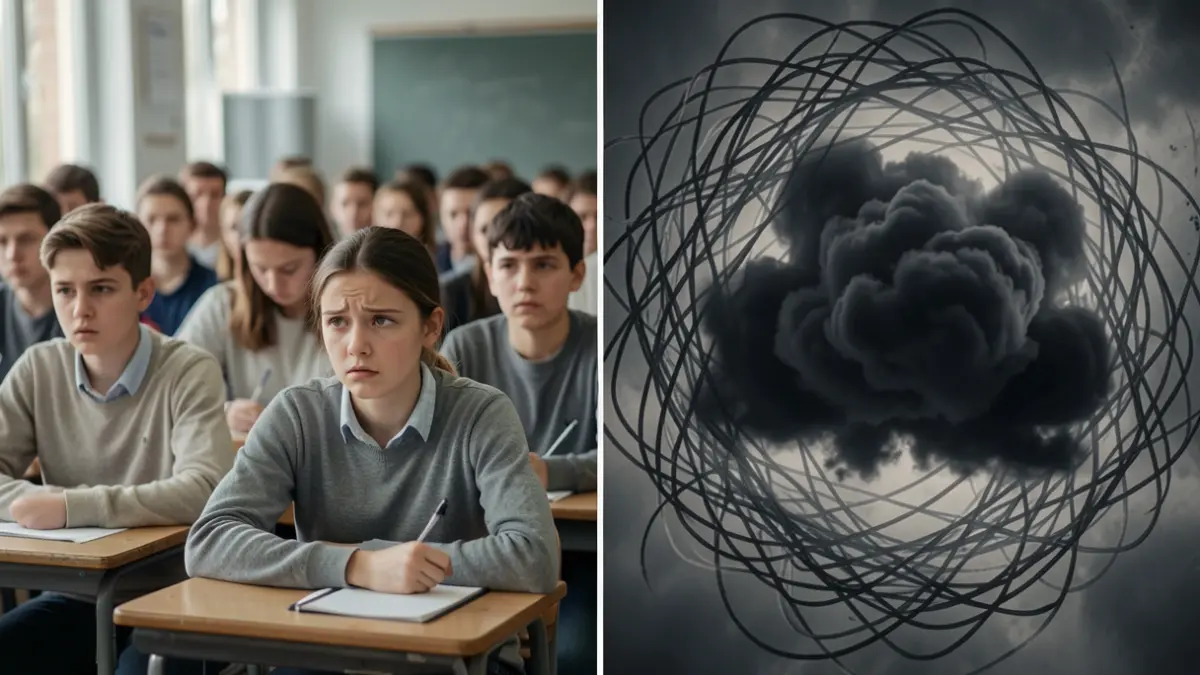
High school students across France have been protesting since mid-September 2026, demanding improvements in their educational conditions, including more substitute teachers, adapted schedules, better building maintenance, and a reform of the higher education allocation system, particularly Parcoursup. These demands reflect a sense of academic pressure and anxiety stemming from a learning environment not conducive to psychological well-being.
Surveys like HBSC and ESPAD, now consolidated under the EnClass survey, reveal a high level of psychological difficulties among adolescents. While adolescence is a period of transformation, results indicate a worsening trend accelerated by the Covid-19 pandemic. Unlike adults, young people have not returned to pre-pandemic symptom levels.
According to the latest EnClass data from 2024, 45% of middle school students report at least one psychological complaint (depression, irritability, nervousness) more than once a week. These difficulties are more prevalent among girls and increase with age. Among high school students, the situation has deteriorated: 19% are at significant risk of depression, 20% have had suicidal thoughts in the past 12 months, and 15% have attempted suicide.
Psychological difficulties persist into young adulthood. The Public Health France Barometer shows that in 2024, individuals aged 18-29 are the most affected group by characterized depressive episodes (21%) and generalized anxiety disorder (8%). They also report the highest rates of suicidal thoughts (8.6%) and lifetime suicide attempts (6.7%).
The deterioration of youth mental health since the pandemic is confirmed by emergency room visits for self-inflicted acts, which are particularly high among girls aged 11-17 and young adults aged 18-24. Hospitalization rates for these acts also increased in 2024.
Beyond armed conflicts and climate change, the worsening social inequalities, marked by a high poverty rate in France, may also play a role. Single-parent families are particularly affected.
The school environment is a significant stressor, particularly the pressure associated with Parcoursup. The HBCS study indicates that while French students are not the most vocal about academic pressure, the situation has worsened in recent years, especially for girls. Confidence in teachers and peers is also lower than average.
PISA surveys corroborate these findings, showing teachers are less interested in individual student success, and students report lower self-confidence and a greater fear of failure. The increase in class sizes and the 2018 baccalaureate reform may have contributed to student isolation.
The relative decline in education funding, despite stable overall investment per student, translates into deteriorating learning conditions: unreplaced teachers, underqualified contract teachers, and a lack of higher education places. Youth mental health is directly linked to their environment, and the school system undeniably influences their experiences.