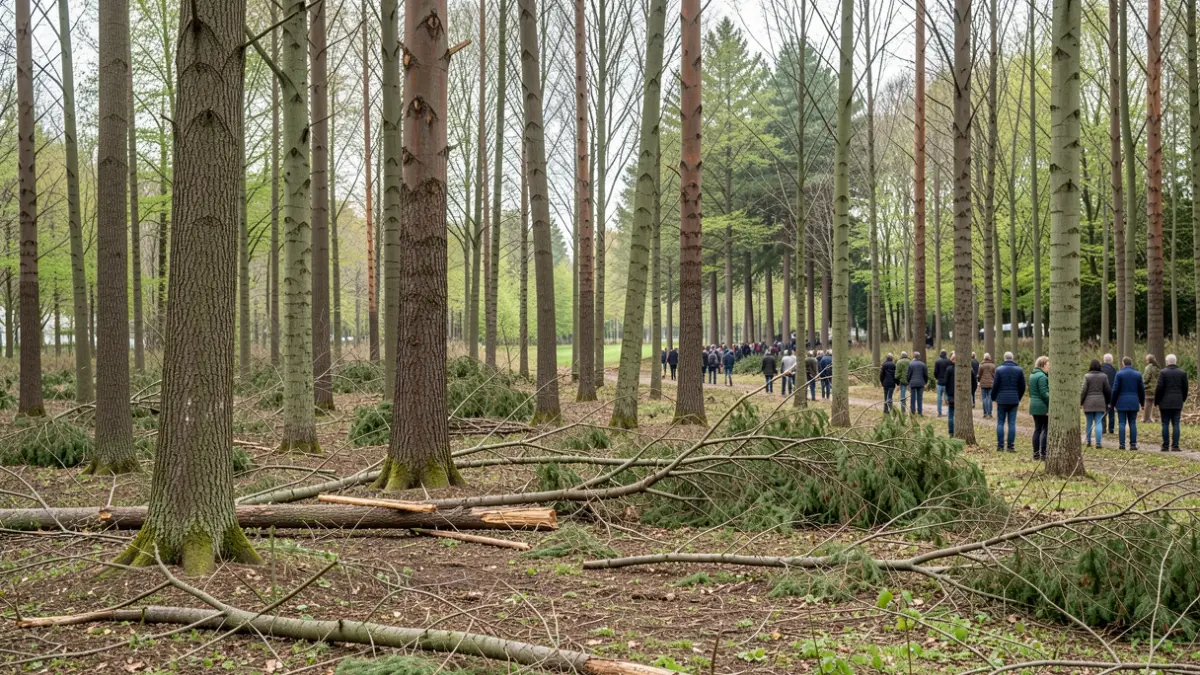
These interventions aim to maintain the health of the forest massif, diversify the existing tree species, and promote long-term regeneration. The work will affect two plots located in Écouen, near the main entrance along Rue du Pré Curé, and in Ézanville, at the northern edge of the forest, near Chemin des Cornouillers.
The plot in Ézanville, bordering residential areas, had previously required safety felling due to ash trees affected by chalarose. The first phase of work, scheduled for late September or early October, will involve mulching the undergrowth to curb the spread of Maple trees suffering from Sooty Bark disease. Plantations are then planned for November, or possibly January, depending on conditions.
The goal is to introduce species better adapted to current climatic conditions, such as Sessile Oak, Wild Cherry, Rowan, Service Tree, Hornbeam, Wild Apple, and Wild Pear. On the plot near homes, shrubs like Hawthorn, Dogwood, Privet, and Blackthorn will be favored to reduce risks and enhance biodiversity.
Although natural regeneration is usually preferred, the strong competition from Maple trees has hindered the development of young oaks due to insufficient light. These low-density plantations, carried out under the forest canopy, will help reintroduce a diversity of species while allowing natural seedlings to grow.
Sooty Bark disease, caused by a fungus affecting only maples, is exacerbated by climate change. It leads to leaf drop and bark peeling, revealing a dark, sooty layer. The disease poses no risk to humans. Access to the affected plots will be restricted during the work for safety reasons.