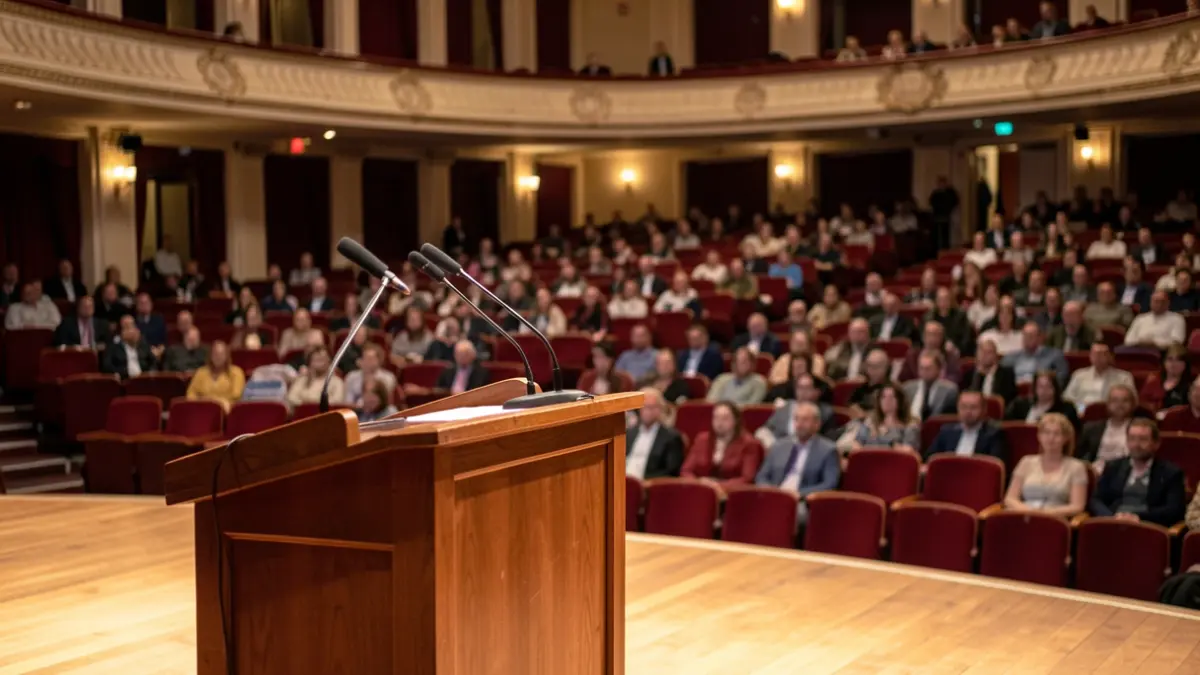
For the first time, UNESCO turned to UPEC to co-create the content of this day with the MOST programme (Social Transformations Management). The event took place from 10:30 am to 6:30 pm, before opening to the public to celebrate the power of critical thinking in the face of current crises.
The morning was inaugurated by a session of deliberative theatre titled 'What do we understand from this story?'. Director Yves Lechermeier invited the audience to analyse scenes co-written and performed by students, questioning the effects of artificial intelligence on human relationships and confirmation bias.
The afternoon was structured around nine workshops. Among them, the 'Narrative practices in philosophy' workshop, led by Roberto Poma, professor of medical humanities at UPEC, allowed participants to exchange without judgment around texts on the theme of migration. The Deliberation Chair of UPEC, led by Émilie Frenkiel, held a citizen convention session to reflect on a university AI charter.
Other workshops explored the scientific and philosophical issues of digital twins, led by Vanessa Nurock, philosophy professor at the University of Côte d'Azur, as well as the ethical questions raised by AI applications in mental health. The day ended with a session open to the public, where students trained in philosophical disputatio by Valentin Grimaud debated the question: 'Can philosophy save the world?'.
These exchanges fed into a final panel bringing together Souleymane Bachir Diagne, Constance Rivière, Roberto Poma and Ahlem Gharbi. Three participants from each partner university were able to formulate action proposals, bringing student voices to the same level as expert speakers.