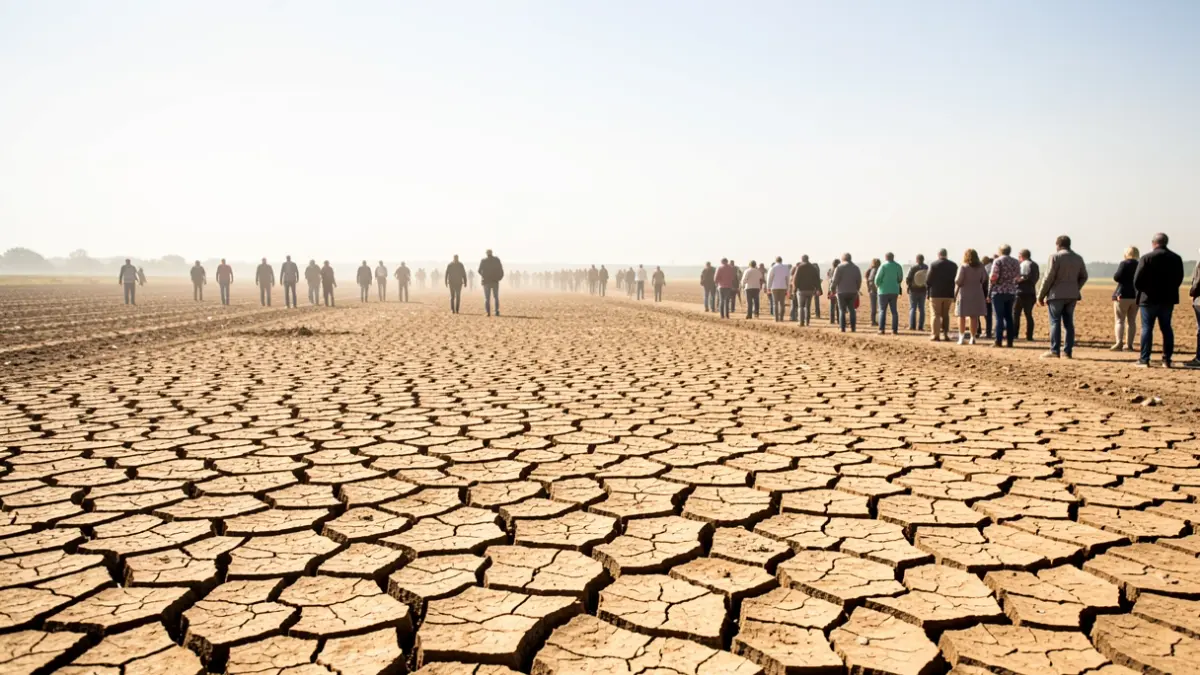
Between June 1st and September 23rd, 2026, the Yerres basin received only 60 mm of rain, compared to an average of 244 mm. Facing this 75% deficit, the Champigny aquifer, essential for the territory's drinking water supply, experienced accelerated drainage in its eastern part. Hydrobiologists from AQUI’Brie answer questions from SyAGE, highlighting the stakes of water resource preservation in the face of climate change.
Following a weak winter recharge, the aquifer has been draining since mid-March. Successive heatwaves and lack of precipitation have accelerated this drainage, particularly in the eastern zone with significant irrigation withdrawals. Early autumn levels remain above vigilance thresholds due to previous rainy winters, but sufficient winter recharge is hoped for to avoid restrictions next spring.
The Regional Health Agency reported no impact on drinking water supply continuity within the SyAGE territory, although vigilance points were noted for the Marne alluvial aquifer intakes. Water producers, however, observed increased consumption due to the early heatwave. The impact of this higher consumption on the Champigny aquifer will be seen in the coming months.
Faced with more extreme climate fluctuations, the territory must learn to manage water resources with increasing demands for agricultural irrigation, sports field watering, and industrial cooling towers. IPCC scenarios predict hotter and potentially longer summers.
To enhance territorial resilience, it is crucial to bring all users together, share observations calmly, and assess the impact of proposed solutions. The Territory Project for Water Management of the Champigny aquifer, launched in September 2026, aims for greater agility in a more chaotic climate.
Regarding domestic water use, reducing consumption is vital. The water information center (CIE) indicates that 40% of household consumption is for showers and baths. Prioritizing short showers, adapting garden watering to weather conditions, and using water-efficient dishwashers are essential steps for conserving water.