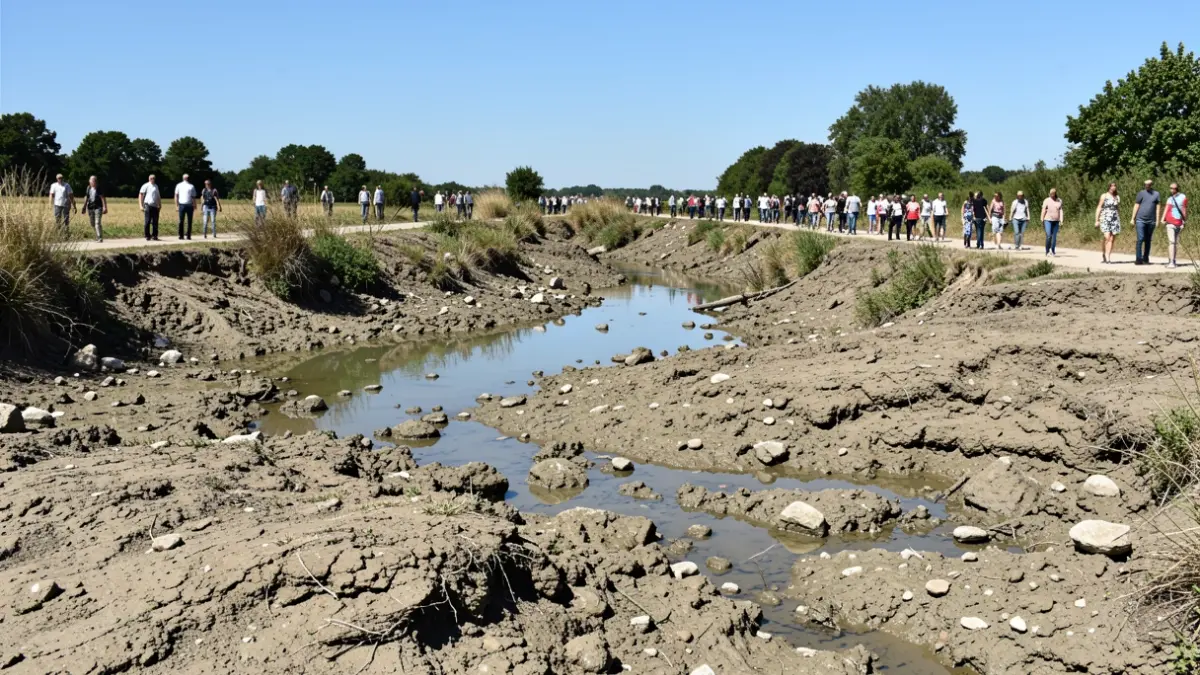
The summer of 2026 has placed the Yvette river, located in Essonne, in a prolonged state of low water levels. Several bodies of water in the watershed also experienced episodes of aquatic animal mortality, raising concerns about the visible effects of these events.
The flow records from the Villebon-sur-Yvette station, operational since 1968 and extended until September 3, 2026, highlight a particularly long drought episode this year. The duration of low water is as important as its intensity in understanding its effects on aquatic environments.
An associated article and a study report from the firm INGETEC, specialists in territorial development and partners of the SIAHVY (Syndicat de l'Yvette), analyze the water levels in the Yvette.