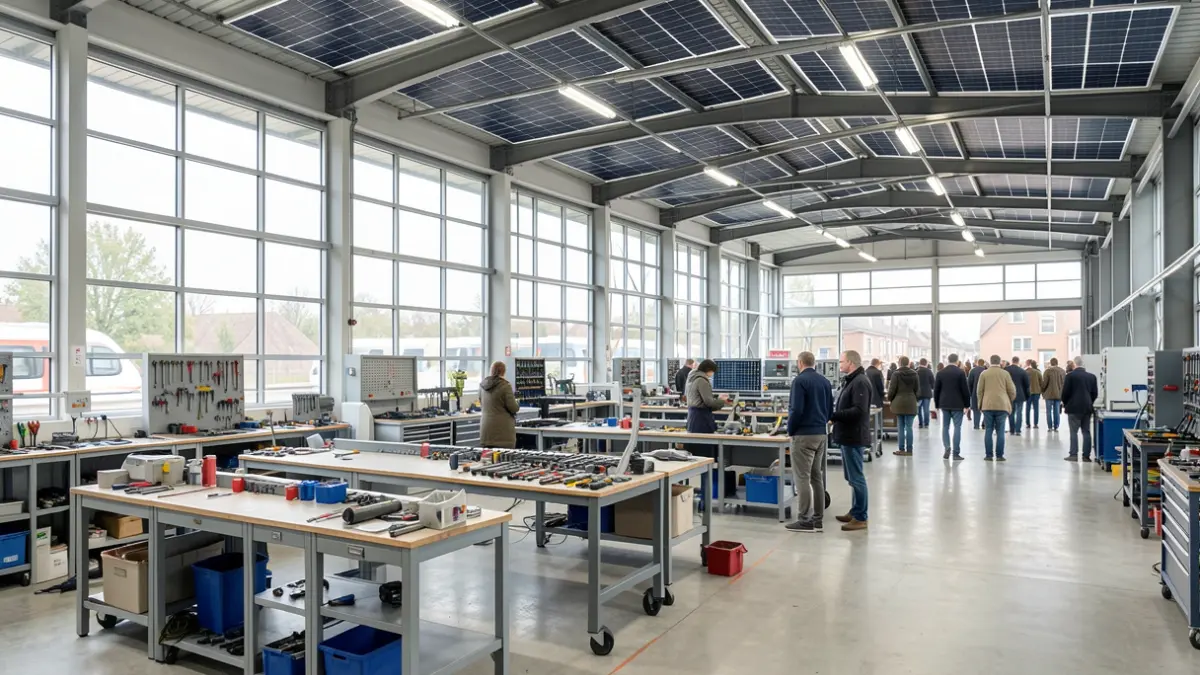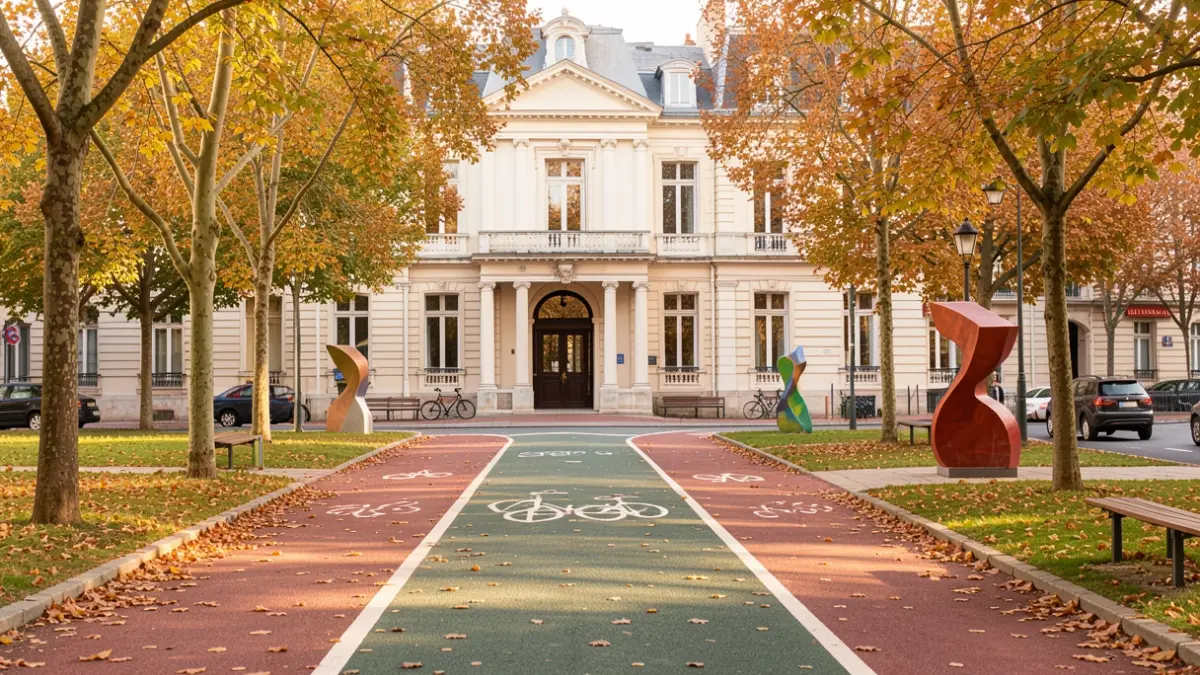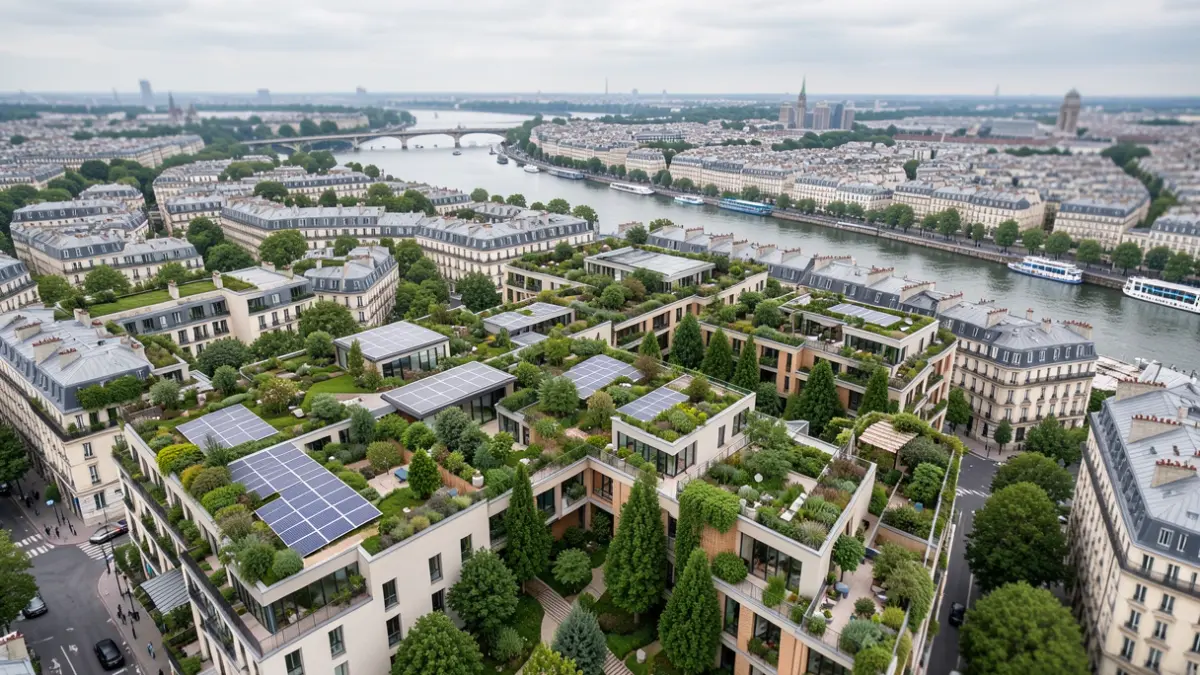
Launched in 2005 in the 17th arrondissement of Paris and awarded the EcoQuartier label, the Clichy-Batignolles project set high environmental standards, particularly in energy performance. A study conducted by the City of Paris and Paris & Métropole Aménagement (P&Ma), with partners une autre ville and Embix, as part of the European project CoRDEES, measured the actual consumption and production of the buildings.
The initial objectives were ambitious: approximately 20 kWh/m²/year of final energy for heating and 23 kWh/m²/year for domestic hot water, 72% of renewable heat from local geothermal energy and the urban heating network, photovoltaic panels covering 40% of the district's consumption, and less than 30 hours per year above 28°C in summer.
The study reveals that heating and hot water consumption remain low in absolute terms but are higher than the targets. These discrepancies are mainly due to technical management, such as heating still being active after May 15th or temperature settings being difficult to verify. The subscribed power, set for the few hours of extreme cold, also degrades the system's performance. Geothermal energy provided the expected output, but the increased demand on the urban network brings the renewable energy share to around 63%.
These findings are already informing actions by the City and its operators: entrusting sub-station management to the network operator, introducing incentive-based pricing for sobriety in the future urban heating concession (from 2027), and shifting the focus from consumption to subscribed power. At Saint-Vincent-de-Paul, P&Ma is already working with a 'call power budget' allocated at the district level.
Regarding summer comfort, an inquiry among a dozen managers concludes with satisfaction, but the initial design, conceived before RE 2020, might not be sufficient for the climate of 2050. The City is focusing on systematic passive building adaptations and the cooling network, which is set to expand from 120 to 250 km by 2042.
With over 17,000 m² of panels, Clichy-Batignolles accounts for 35% of Paris's photovoltaic surfaces. The installed capacity reaches 2,900 kWc. A key lesson learned concerns the handover process from construction to operation, where administrative procedures, maintenance, and monitoring have not always found continuity. The City is exploring more collective models, such as the concession entrusted to the cooperative Enercitif.
The CoRDEES project, initially intended as a 'district energy facilitator', has clarified two distinct needs: ensuring the transition between construction and operation, and engaging managers and users on energy issues at a broader scale than the district. P&Ma has developed tools like systematic commissioning and an environmental facilitator.