Observing a cliff, a river meander, or a layer of limestone allows for the reconstruction of past environments and the addressing of current questions about resources, water circulation, and the impact of our developments on natural environments. This is the objective of the 'geol internship' undertaken by first-year students from Mines Paris – PSL from September 20 to 26, 2026.
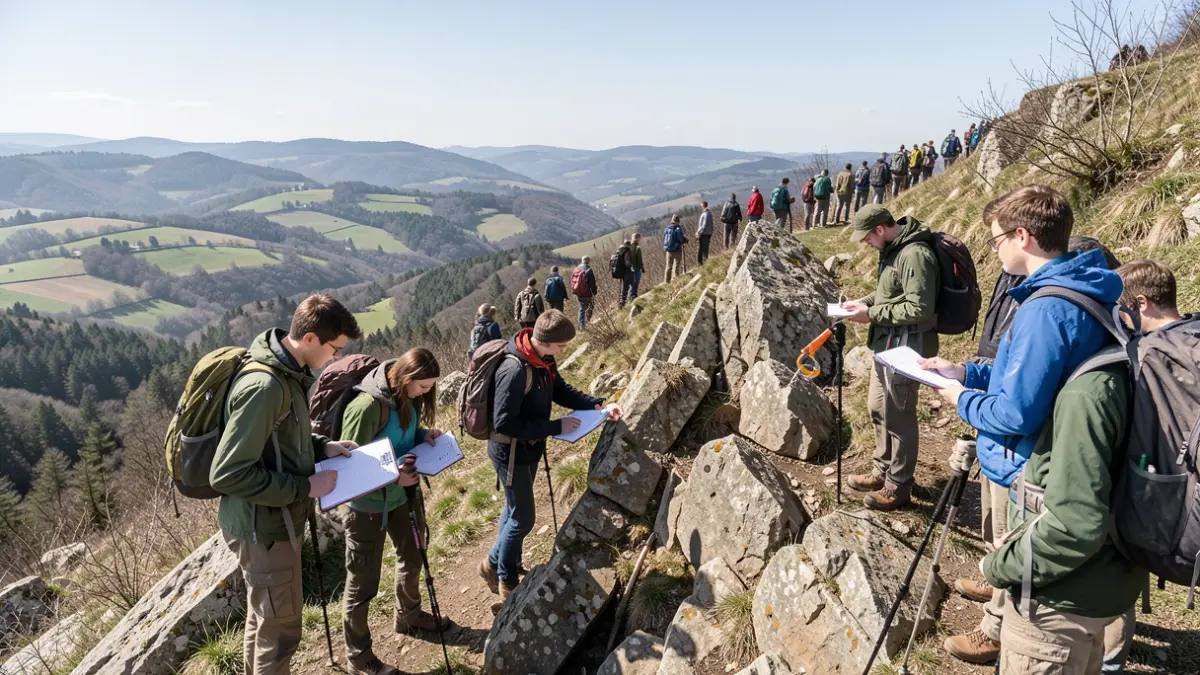
Divided into six varied field sites, from the Paris Basin to the Pyrenees, including the Morvan, Normandy, and the Alps, the students learned to observe the Earth as a dynamic system. With notebooks in hand, they studied exposed rocks, made sketches, and sought to understand geological structures to reconstruct the history of environments (environment, landscape, climate).
This internship aims to develop a naturalist scientific approach linked to climate evolution, distinguishing observed facts from their interpretation and learning to draw conclusions from sometimes incomplete clues.
Rocks, precious climatic archives, provide information on temperatures, humidity, river flow, and erosion. The study of sediments, fossils, and geomorphology, as seen in the Alps and Pyrenees, sheds light on past climatic variations influenced by continental drift, glacial periods, volcanism, or solar activity. In Normandy, the Vaches Noires cliffs at Villers-sur-Mer bear witness to vanished environments.
Understanding rock formation allows for the determination of their properties (porosity, permeability) and their role in industrial and energy applications: concentration of mineral resources, underground reservoirs for gas or geothermal energy. Students thus studied fluorite mineralization in the Morvan, coal in Digne-les-Bains and La Mure, and metal deposits in the Pyrenees.
In Normandy, the study of sandstones at Darvault and the Beynes gas storage site, as well as an old chalk quarry at Caumont, allowed for the analysis of underground reservoirs and fluid circulation. Students calculated the potential gas storage volume and modeled river dynamics.
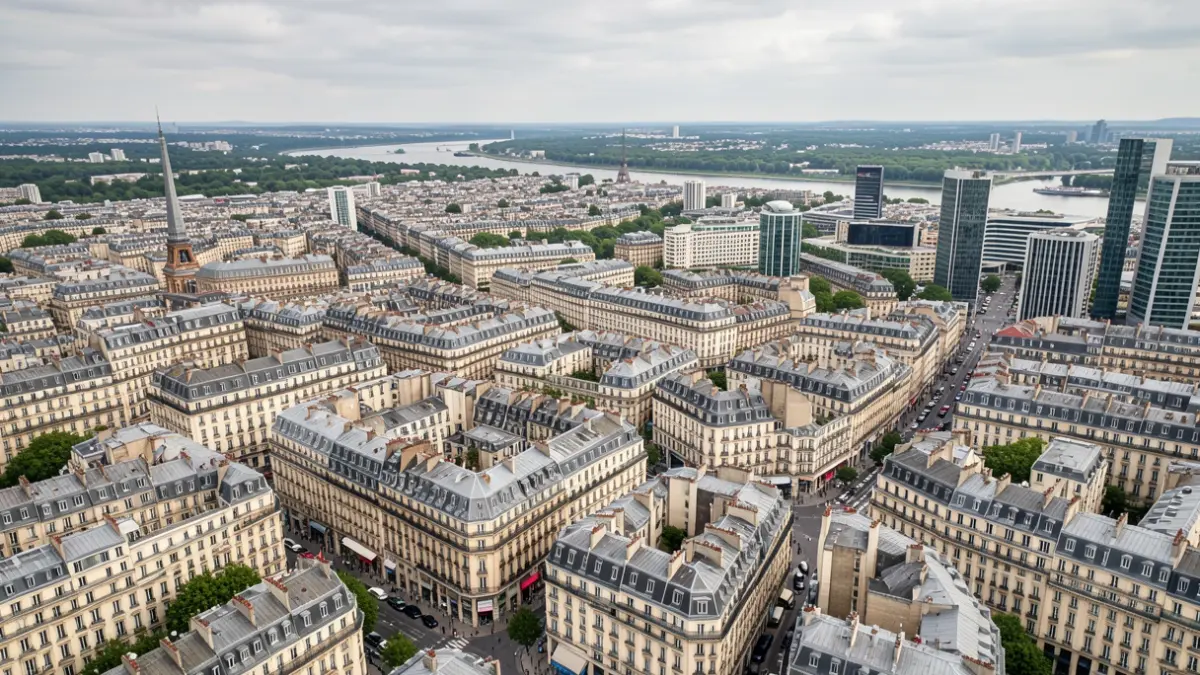
The subsurface is an essential space for water, raw materials, gas storage, CO₂ sequestration, or waste containment. The Norman route includes a hazardous waste storage site at Tourville-la-Rivière. In the Paris Basin and the Morvan, resource study is placed in the context of the Parisian metropolis's needs. In the Pyrenees, the study of geological reservoirs concerns uranium, natural hydrogen, and CO₂ storage. The Laragne site in the Alps sheds light on South American salt flats and lithium.
The internship confronts students with the complexity of natural systems and the limits of knowledge, where data is often incomplete. They learn to observe before concluding, to confront models with reality, and to cope with uncertainty.
The study of landscapes shaped by water, such as rivers, is essential. The construction of dams in the Alps, the study of developments in mountainous areas at Digne-les-Bains, and the evolution of the Seine in the Bassée plain, along with meanders downstream from Rouen, illustrate the interaction between natural processes and human activities. These mechanisms are linked to current climate challenges, such as erosion and runoff.
This internship, which combines field observation, mapping, and modeling, trains engineers capable of understanding complex systems and grasping contemporary issues, starting by looking at what lies beneath our feet.