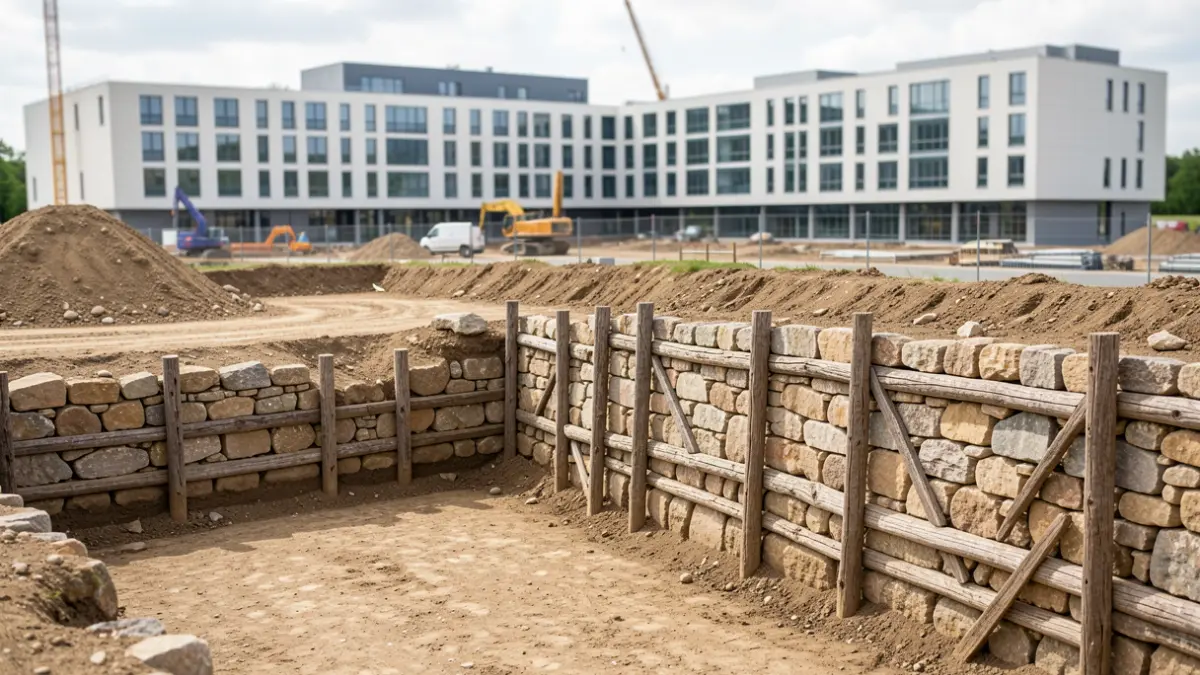
Excavations conducted since February 2026 in the courtyards of the Hôtel-Dieu by the archaeological service of the City of Paris (DHAAP) and the Inrap, under the auspices of the Ministry of Culture, have uncovered an imposing stone and wood wall nearly twenty meters long. Its construction technique is characteristic of late Iron Age Gallic fortifications.
Initial analyses suggest it could be part of the rampart of Lutetia from the time of the Parisii, before the arrival of the Romans. If confirmed, this discovery would represent an exceptional advance in understanding the origins of Paris, as no archaeological evidence has previously established with certainty the existence of a structured Gallic settlement on the Île de la Cité.
This discovery necessitates extending the archaeological research, potentially until spring 2027, to determine the best conditions for preserving the remains. The impact on the construction schedule for the Nouvel Hôtel-Dieu could shift the delivery of the two courtyards to spring 2029, with an opening planned for autumn 2029.
The Nouvel Hôtel-Dieu project continues in full, aiming to successfully complete this ambitious undertaking despite these schedule adjustments.