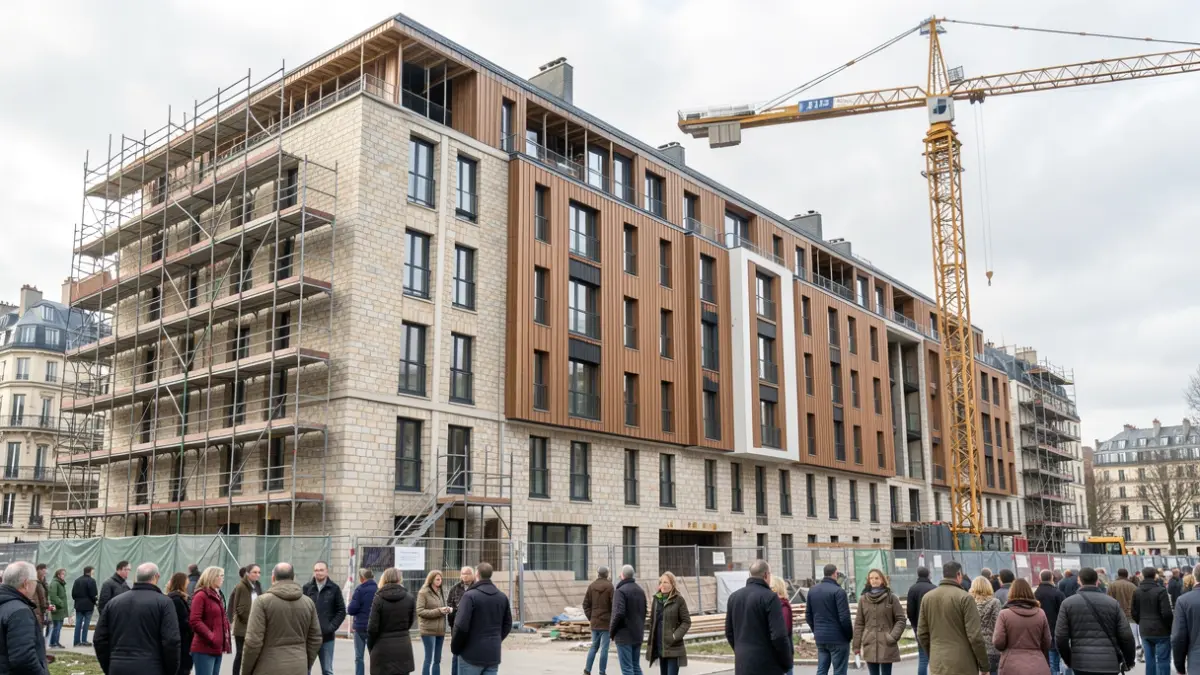
Block A in the Python-Duvernois district underwent partial deconstruction, finalized in July 2026. An innovative approach, validated after a test phase, guided the project. The structure, built from solid stone and concrete, was demolished two-thirds. The remaining section is currently undergoing rehabilitation to extend its lifespan and fully integrate it into the district's transformation.
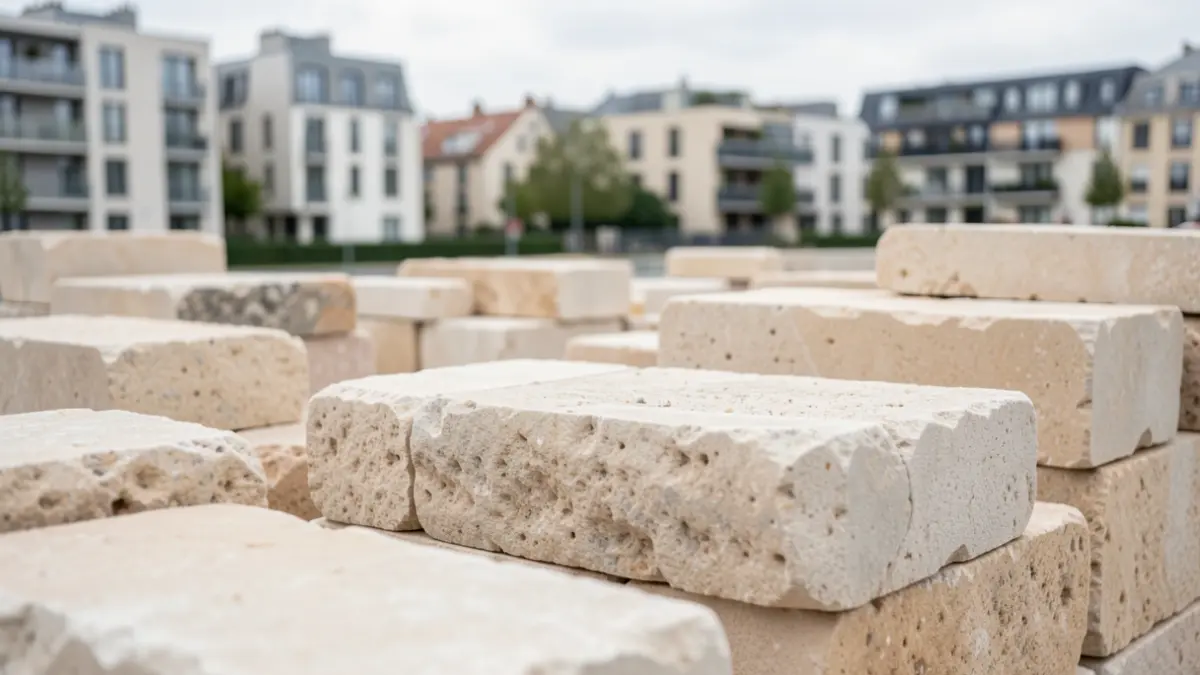
The demolished portion is also finding a second life through the reuse of its materials and equipment. The deconstruction was designed to preserve and valorize elements such as limestone blocks, balustrades, cast-iron radiators, stair treads, and sanitary ware. A total of 455 m3 of stone was carefully removed and stored for reinstallation, requiring custom techniques developed with the demolition company.
Some of the collected materials and equipment will be reused on other construction sites. PVC window frames, glazing, balustrades, and concrete will be recycled. This strong commitment to massive reuse and recycling aligns with a long-standing construction tradition, as highlighted by Gaëlle Billioud, project supervisor for the RIVP.
« Rebuilding the city from the city by reusing construction elements is a technique that has been used throughout time and until recently. Returning to these good practices allows us to extend the life of this quality building for a number of years », explains Gaëlle Billioud. Rehabilitation work began on August 31, 2026, and will continue until early 2029.
Materials reused on-site include 455 m3 of stone, 500 cast-iron radiators, 77.5 tons of balustrades, 474 stair treads used for flooring, 8 concrete beams for outdoor seating, and 56 m2 of porcelain stoneware tiles.