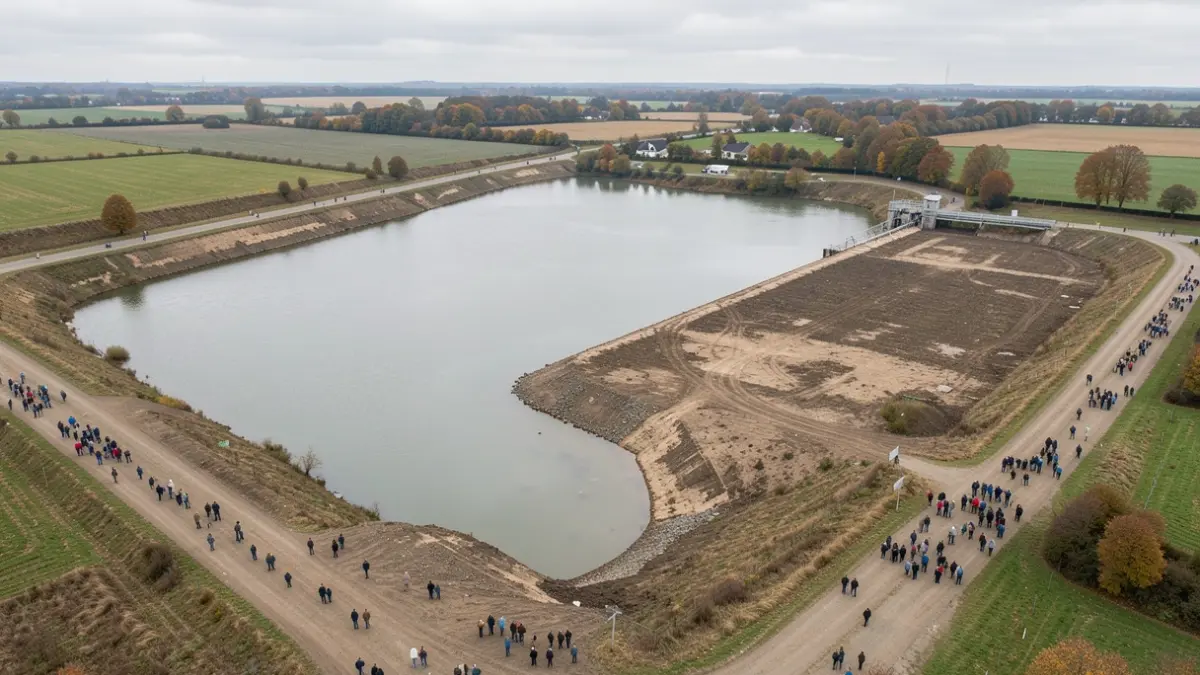
As the hydrological situation on the basin continues to deteriorate, the Seine Grands Lacs agency is continuing to draw down its lakes to protect populations and ensure the continuity of water uses. From November 1st, it is mobilizing the lake reserves, which were precautionary reinforced to cope with a late drought, in order to be able to continue drawing them down until early 2027. This situation is exceptional, as lake support normally ends by December 15th at the latest.
Faced with a tense hydrological context, marked by a dry spring and a strong heatwave from the end of May, Seine Grands Lacs began the drawdown phase of its reservoir lakes on June 2nd, 2026, nearly a month ahead of the usual schedule. This annual operation ensures sufficient flows in the Seine, Marne, Aube, and Yonne rivers, benefiting aquatic environments and downstream uses: drinking water supply, wastewater treatment plant operation, navigation, economic activities, and the functioning of strategic facilities, such as the nuclear power plant at Nogent-sur-Seine.
During spring and summer, successive heatwaves on the Seine basin accentuated the drop in river flows from late May. Seine Grands Lacs therefore repeatedly adjusted the volumes released from its lakes. This fine management has helped preserve essential uses—drinking water, navigation, irrigation—limited restrictions so far, and protected biodiversity on the Seine and its tributaries.
These contributions proved decisive throughout the summer. In August, the flow of the Seine at Nogent-sur-Seine was equivalent to the flow released by the Orient and Amance-Temple lakes. In Île-de-France, where river navigation is a major economic issue and 70% of drinking water comes from the Marne and Seine, nearly two-thirds of the water in these two rivers originated from the reservoir lakes.
Insufficient rainfall in September and October did not end the drought. Given this situation and weather forecasts, Seine Grands Lacs, in close collaboration with the State, local authorities, major users, and river unions, has decided to continue the drawdown phase of the reservoir lakes beyond November 1st. Reserves, previously reinforced, will be used cautiously to extend flow support.
Thus, releases will be maintained if necessary until January 18th, 2027 on the Der lake (Marne), until December 24th on the Amance-Temple lake, and until December 19th on the Pannecière lake (Yonne). On the Orient lake (Seine), releases will stop on November 22nd, 2026 due to essential renovation work on the La Morge dam.
As of November 1st, the structures still hold 176 million m³ of water, or 22% of their normal capacity. Seine Grands Lacs supports the call for vigilance launched by state services and urges every user to limit water consumption and follow issued usage restrictions.