The public institutions Epa Marne-EpaFrance have structured their CSR policy around six measurable commitments: environment, climate and resilience; agroecological transition; responsible purchasing; societal and territorial impact; quality of life and inclusion at work; steering and governance. The objective is to move from already engaged initiatives to a comprehensive approach, supported by monitoring indicators.
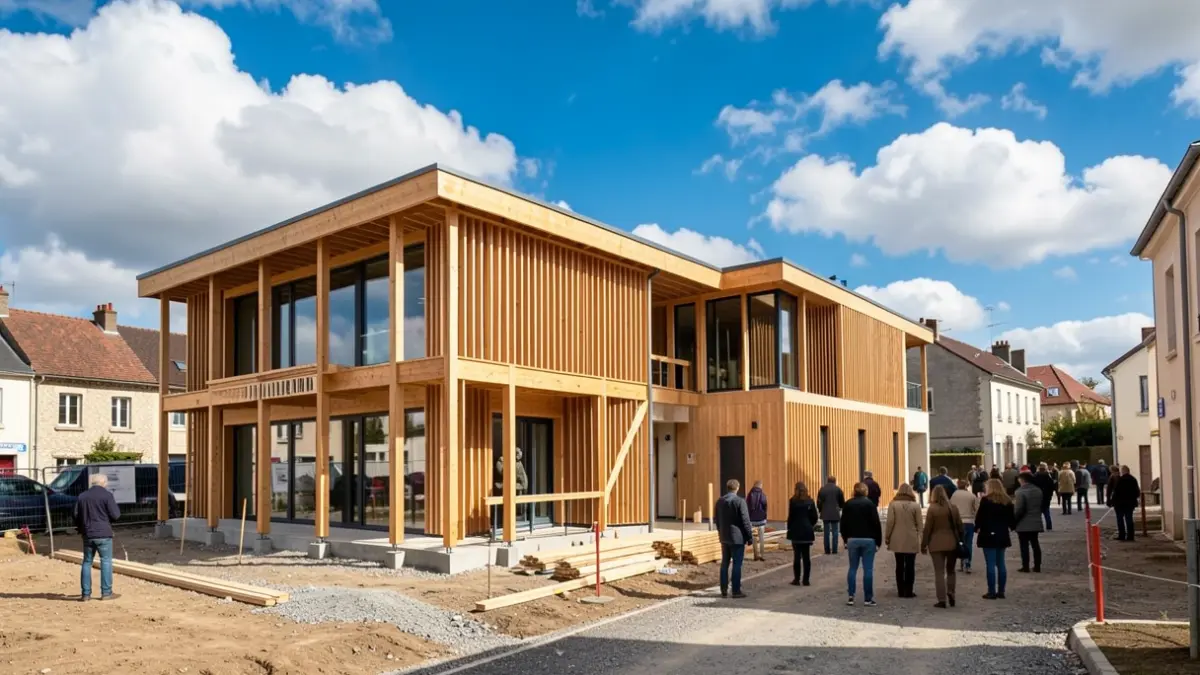
For over a decade, the institutions have integrated environmental and social issues into their development operations, resulting in over 10,000 housing units using bio-based materials. With this new approach, part of the 2025-2029 Strategic and Operational Project, they aim to generalize these environmental, social, and territorial requirements across all their projects and practices.
“"Our ambition is to scale up: no longer just multiplying exemplary operations, but generalizing the same environmental, social, and territorial requirements across all our projects and practices. This approach will allow us to concretely measure the progress made and identify the levers on which we still need to advance, without ever tipping into the 'out of touch' and 'out of market'. Our strength lies in evidence-based discourse, with measurable actions."
The six pillars aim to evolve the sustainable development model. Regarding the environment, climate, and resilience, the institutions continue their efforts in decarbonizing urban development, energy performance, and thermal comfort, by generalizing summer comfort requirements.
In the agroecological transition, they preserve and enhance agricultural land, supporting the development of local sustainable sectors, with projects such as the Torcy agricultural park or the Mont d’Est urban farm.
For responsible purchasing, an environmental organization scheme integrates transition into the purchasing policy, aiming for an environmental clause in 100% of contracts and a social clause in at least 50%.
The societal and territorial impact aims to make each neighborhood a lever for social cohesion and economic attractiveness, relying on a comprehensive residential offer and partnership tools.
Quality of life and inclusion at work are reflected in internal practices, including skills development, information transparency, an equal pay policy (gender index of 90/100 in 2025), and inclusion of people with disabilities.
Finally, steering and governance rely on indicators, an annual review, and CSR reporting to track progress, strengthen stakeholder confidence, and ensure transparency in practices.