Christophe Botella, a statistical ecology researcher at Inria and the University of Montpellier, has been awarded the 2026 Collège de France prize for young researchers. His research focuses on developing statistical models to estimate and anticipate biodiversity changes from heterogeneous data generated by citizen science platforms.
He will give a conference titled "Biodiversity in a Broken Mirror: Mapping Flora in the Era of Citizen Observations" at the Collège de France on November 26, 2026 at 6 PM. The conference will discuss how massive data collected by initiatives like Pl@ntNet can be transformed into reliable knowledge to better understand the pressures on ecosystems.
Passionate about science and mathematics from a young age, Christophe Botella found a concrete purpose in biostatistics, particularly for understanding plant resistance to drought. After engineering school and a master's degree in mathematics for life sciences, he focused his research on exploiting opportunistic data from citizen science platforms, which record millions of observations worldwide.
His work aims to correct observation biases inherent in this data, such as user concentration in certain areas. He uses species distribution models and deep learning to reliably predict species presence and absence, even from fragmented data. These methods are tested by comparing them with exhaustive inventories compiled by expert botanists.
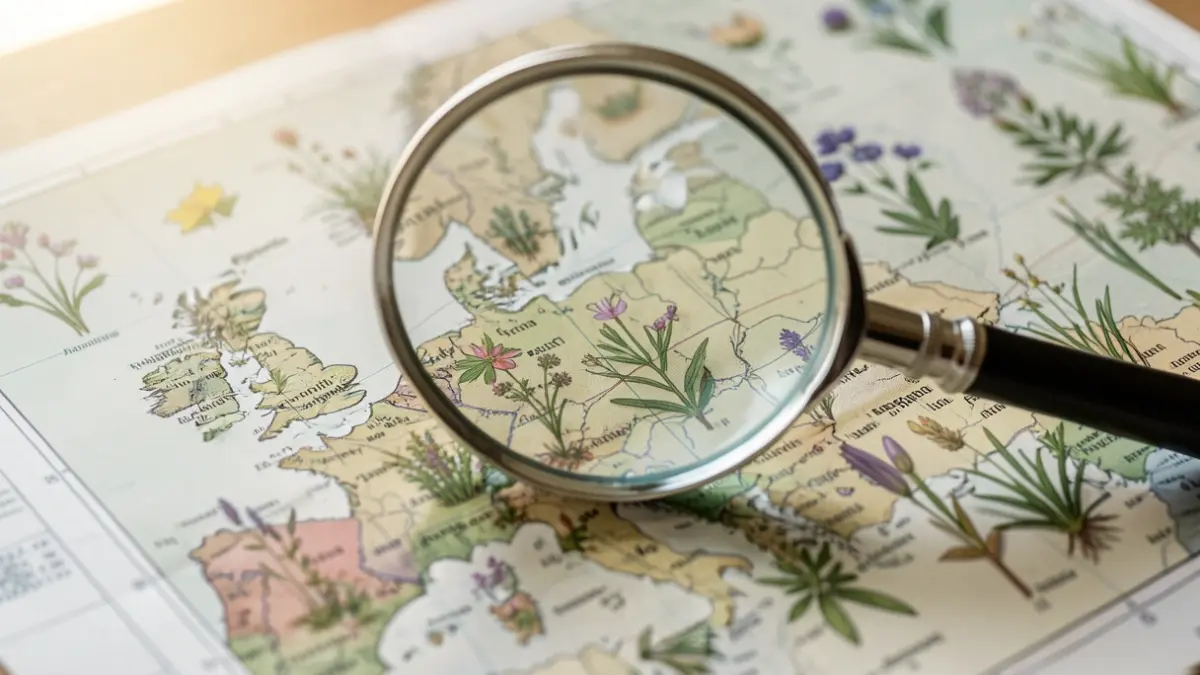
The GeoPl@ntNet tool, released in 2025, maps European flora at a fifty-meter resolution and generates local biodiversity reports for small municipalities. The goal is to integrate a temporal dimension to characterize biodiversity evolution and the impact of human pressures and climate change. Citizen science platforms are also recognized for the early detection of invasive alien species.
“"Political power does not necessarily transform scientists' alarm bells into actions that take them fully into account."
Christophe Botella emphasizes the importance of interdisciplinary collaboration with ecologists and field conservationists. He notes a frequent disconnect between large-scale scientific findings and their practical application in natural parks, a challenge he wishes to develop further.