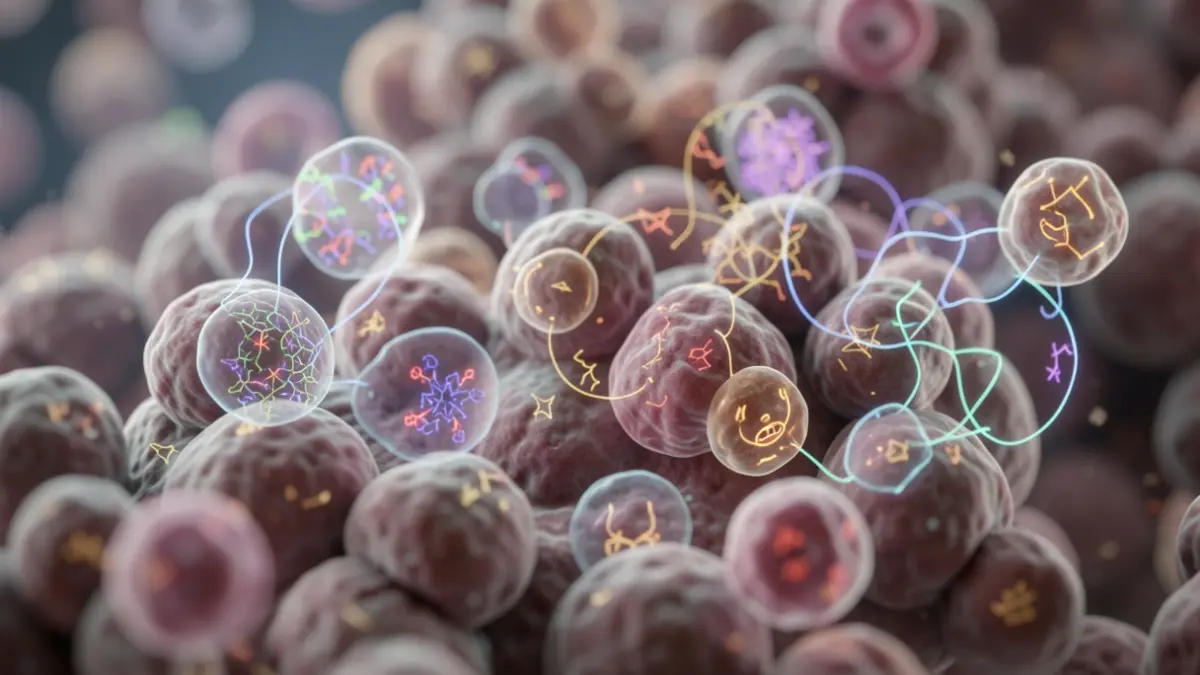
In research on high-grade serous ovarian cancer, an aggressive form of the disease, scientists have identified specific cellular states associated with chemoresistance. These findings, published in Cancer Discovery, indicate that some tumor cells are epigenetically 'configured' to resist treatments even before they are administered.
The study individually analyzed tumor cells from patients before and after treatment, revealing recurring cellular evolutions. In patients responding well to chemotherapy, a decrease in dividing cells and those activating interferon response programs was observed. Conversely, treatment resistance was linked to an increase in cells activating functions related to TNF and EMT (cellular changes).
Through epigenomic analyses, it was highlighted that these resistant cells are epigenetically 'pre-configured.' This predisposition could facilitate the activation of resistance programs when they encounter chemotherapy, underscoring the importance of studying the tumor's state before treatment exposure, beyond just genetic mutations.
These discoveries open promising prospects for developing diagnostic tools to identify patients likely to respond less effectively to chemotherapy. The approach, already being implemented by the startup One Biosciences across several cancer types, aims to better understand treatment response and resistance mechanisms for more precise therapeutic guidance.
Researchers are also exploring new therapeutic targets and drugs to block mechanisms that promote tumor cell resistance.