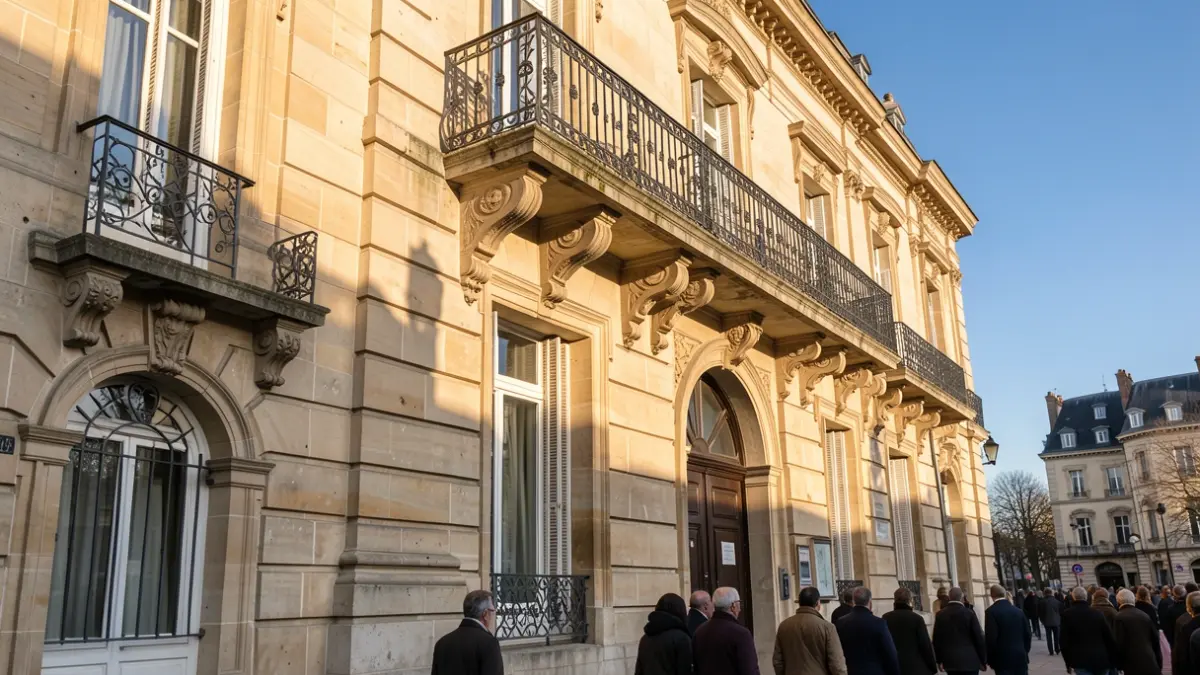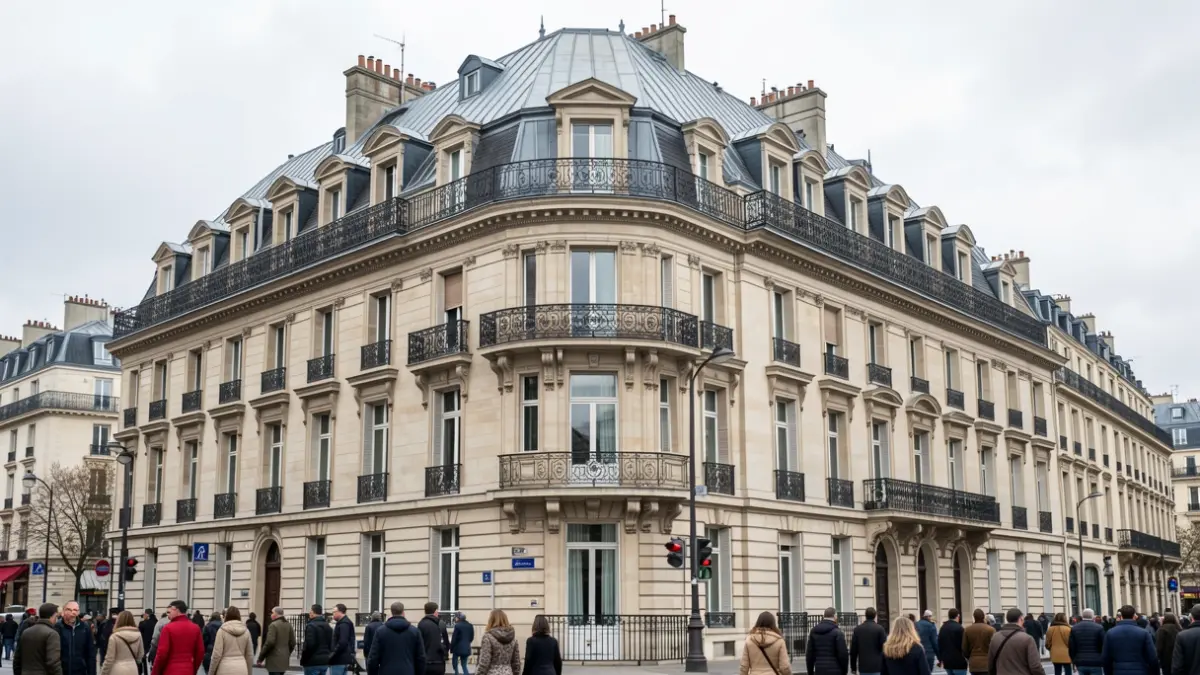
Organized by the Ministry of Culture, these JNA allowed Paris Habitat to unveil part of its heritage. Architects and industry professionals led public tours, notably at residences located at 9 rue Pavée (4th arrondissement) and 20 rue Ginette-Neveu (18th arrondissement).
The Council for Architecture, Urbanism, and the Environment (CAUE) initiated visits to the Cité Michelet (19th), the residence at 186 avenue Jean-Jaurès (19th), and the Habitation bon marché, Alphonse Karr residence (19th). Built in 1932 with 478 housing units, the latter served as a venue to present an ongoing rehabilitation program aimed at improving energy efficiency, resident comfort, and quality of life.
These tours underscored the significance of social housing in architectural creation and its connection to heritage, while also showcasing the Office's rehabilitation efforts on its existing stock.
Elsewhere in Paris, such as at 2-14 rue de Van Loo (16th arrondissement), Paris Habitat also emphasized its contribution to urban development. At this site, an upcoming project transforms a former parking lot into an innovative wooden construction. Elements designed in a factory and then assembled on-site will result in 25 social housing units, a 54-bed nursery, and a large landscaped area.
Through these visits, participants could appreciate the central role of social housing in Parisian architectural history, embodying challenges such as historical heritage, construction innovation, environmental transition, and improved living conditions, shaping the capital's urban landscape for over a century.